





n8n and Claude agentic AI are both described as "automation tools." They are not the same thing. One is a workflow engine. The other is a reasoning engine. Using the wrong one for the wrong job costs you money and time.
The core distinction
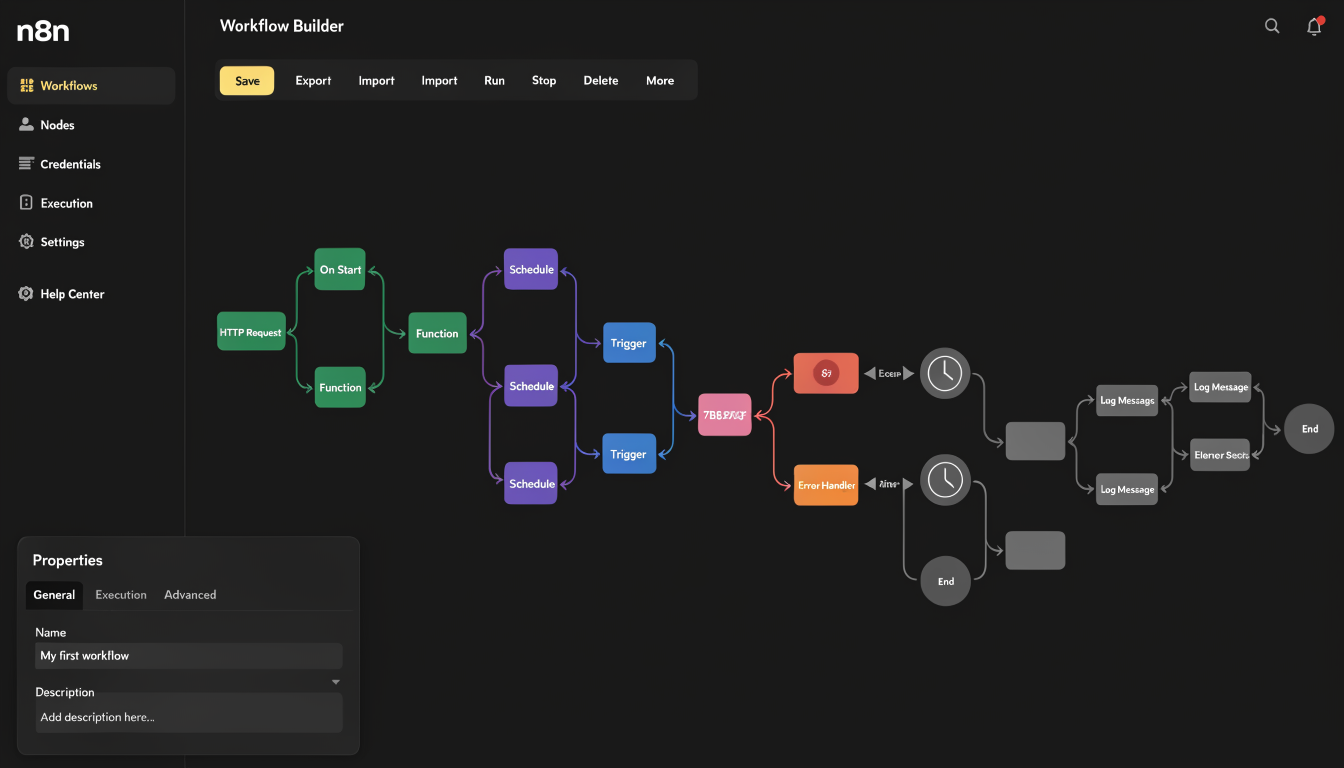
n8n is deterministic workflow automation. You define every step. It executes exactly what you tell it, every time, reliably. Think of it as very sophisticated plumbing.
Claude agentic AI (with or without OpenClaw or MCP) is probabilistic reasoning with action. You give it a goal and context. It decides the steps, uses tools, handles ambiguity, and can self-correct mid-task.

When n8n wins
- Lead capture from Property Finder or Bayut to a CRM - exact, repeatable, zero ambiguity (the backbone of any CRM implementation)
- Invoice generated when a deal stage changes in Zoho - a deterministic trigger
- SEO page generator: a Google Sheets row becomes a WordPress post via REST API (we built this for clients)
- Cold email sequence: a contact is added to a list, then a five-step drip runs over 14 days
- WhatsApp message when a form is submitted - millisecond precision, no interpretation needed
- Scraping structured data on a schedule
Rule: if you can write the exact steps on a whiteboard and they never change, use n8n.
When Claude agentic AI wins
- Reviewing a sales call transcript and drafting a follow-up email with context pulled from the CRM
- Analysing 50 Property Finder listings and producing a competitive pricing brief
- Customer support where the question is unstructured and the answer requires judgment
- Content brief generation from a URL plus a keyword list - it reads, interprets, and produces
- Lead qualification from a form where intent is ambiguous
Rule: if the task requires reading, interpreting, deciding or writing based on variable input, use an AI agent. This is the heart of our AI automation work.
The agent is only as good as what sits underneath it. See what that foundation needs to look like →
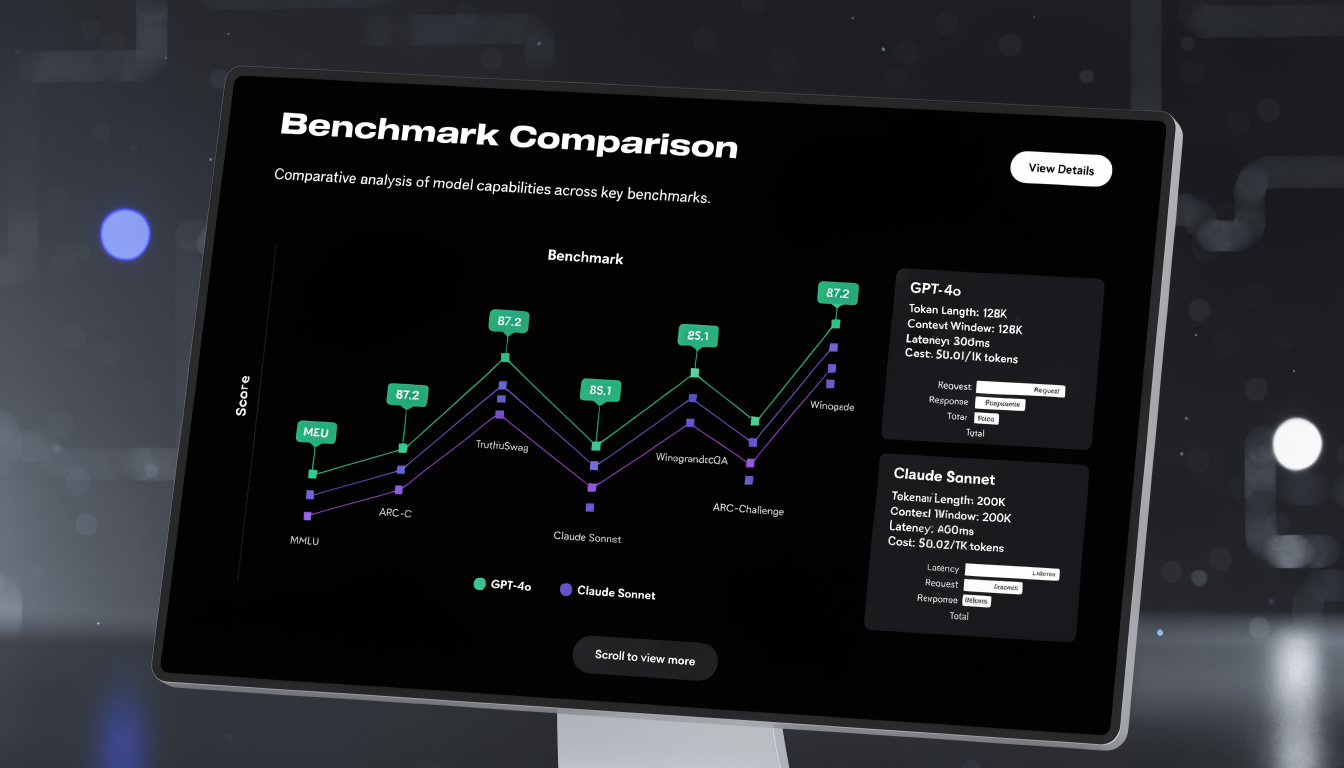
n8n vs Claude: Decision Matrix
When clients come to us asking which tool should power their business automation, we walk them through the same five questions every time. The answers almost always make the choice obvious.
| Question | If yes → n8n | If yes → Claude |
|---|---|---|
| Can you write the exact steps on paper? | ✅ Deterministic flow | , |
| Does the input vary in format or meaning? | , | ✅ Needs interpretation |
| Do you need 99.9% repeatability? | ✅ Same output every run | , |
| Does the task involve reading, judging or writing? | , | ✅ Reasoning required |
| Is the team non-technical? | ✅ Visual no-code builder | , |
Choose n8n when: the workflow is a chain of known integrations - form to CRM, CRM to invoice, invoice to WhatsApp. No-code, visual, and predictable. If step three fails, you can see exactly why, fix the node, and re-run. This is the right tool for the 80% of workflow automation that is really just moving structured data between systems on a trigger.
Choose Claude when: the input is unstructured - emails, call transcripts, listing descriptions, customer complaints - or the logic has too many branches to map by hand. A rules engine with 40 if-statements is a maintenance nightmare. A Claude agent with a clear prompt and good context handles the same variability in one reasoning step.
Choose both when: the pipeline is structured but one step in the middle requires judgment. That is most real businesses.
What is OpenClaw / MCP, and when does it matter?
MCP (Model Context Protocol) is a standard that lets Claude agents connect to external tools and data sources. OpenClaw is a community implementation. In practice, a Claude agent can read your CRM, query your database, trigger actions in other apps, and return results - all within a single reasoning loop.
This is where the real power sits. An n8n workflow that calls Claude via API for one step (for example, "classify this lead") is not agentic. A Claude agent with MCP that reads your Zoho pipeline, identifies stale deals, drafts reactivation emails and queues them - that is agentic.

The honest hybrid answer
Most real Dubai business needs require both. n8n automation handles the reliable plumbing. Claude handles the judgment steps inside the pipe. A WhatsApp-driven real-estate pipeline is a good example of the two working together. For a full breakdown of how this applies to WhatsApp-first businesses, see WhatsApp AI agents for UAE service businesses.
Example we have built: n8n captures a lead from a website form, enriches the data, and passes it to Claude with CRM context. Claude drafts personalised outreach, then n8n sends it via Gmail or WhatsApp.
Real Workflow Examples
Abstract comparisons only get you so far. Here are workflows we have actually scoped or built for UAE businesses, split by which engine does the work.
Pure n8n: lead scoring to CRM to email to Slack. A property lead submits a form on your website. n8n receives the webhook, scores the lead on hard rules (budget field above AED 2M = +30, Dubai Marina = +20, phone number present = +10), creates the contact in Zoho with the score, fires a templated email within 60 seconds, and posts a summary to the sales Slack channel. Every step is deterministic. The lead with a score of 85 gets the same treatment every single time. This kind of business automation runs for months without anyone touching it.
Pure Claude: extracting intent from unstructured lead messages. A WhatsApp message arrives: "hi saw ur listing on bayut, is the 2br still available, also do u have anything similar in jvc under 90k, my company pays quarterly." No rules engine parses that reliably. A Claude API call extracts the structured facts - unit of interest, alternative area, budget ceiling, payment terms - classifies the intent as high-value rental enquiry, and routes it to the rentals team instead of the sales team. One reasoning step replaces a human reading and triaging hundreds of messages a day.
Hybrid: the two stitched together. n8n catches the WhatsApp webhook, passes the raw message to Claude for intent extraction, receives clean JSON back, and then does what n8n does best - updates the CRM, assigns the right agent, and schedules the follow-up. The plumbing is deterministic; the judgment step is not. That division of labour is the pattern behind most of our AI automation engagements.
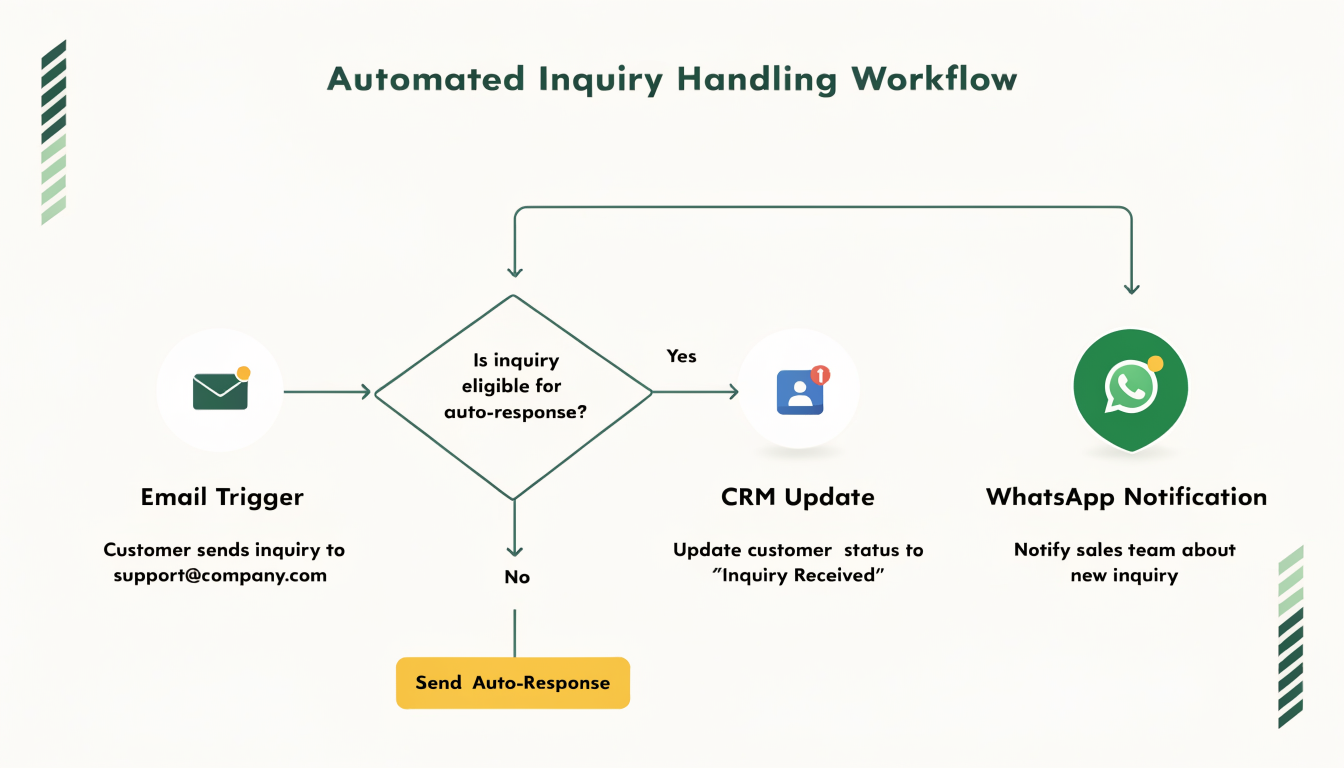
Cost and complexity reality check
Cost - n8n self-hosted runs around $20/month, cloud from $20/month. A Claude agent runs on API tokens, which scale with usage.
Reliability - n8n is very high and deterministic. A Claude agent is high but non-deterministic.
Setup complexity - n8n is medium (a visual builder). A Claude agent is higher (prompts, tools, testing).
Handles ambiguity - n8n, no. Claude agent, yes.
Best for - n8n: triggers, data routing, scheduling. Claude agent: reasoning, writing, analysis.
If comparing API costs versus infrastructure costs for agentic build, this breakdown goes deeper →
Cost Analysis
The pricing models are fundamentally different, and that changes the ROI math.
n8n charges per execution. Self-hosted, executions are effectively free beyond your server cost - run 50,000 workflows a month on a $20 VPS. Cloud plans meter executions, but even heavy usage rarely crosses $100/month. Cost is flat and predictable, which is why n8n is the default for high-volume, low-judgment workflow automation.
Claude charges per token. A typical lead-classification call costs a fraction of a fil; a long agentic loop reading CRM context and drafting emails might cost AED 0.50–2 per run. Costs scale linearly with volume and with how much context you feed the model.
The ROI framing that matters: do not compare tool costs to each other - compare them to the salary of the person doing the task manually. If a Claude step costs AED 1 and replaces 10 minutes of an AED 8,000/month employee's time, it pays for itself roughly 8x over. Reserve tokens for judgment; let n8n handle volume for pennies.
Integration Capabilities
n8n ships with 400+ native integrations - Zoho, HubSpot, Google Sheets, WhatsApp Business, Slack, Telegram, Airtable, Property Finder via HTTP, and anything else with a REST API. Setup is drag-and-drop: authenticate once, pick the operation, map the fields. A non-developer can connect two systems in an afternoon.
Claude reaches tools through MCP and the API. Fewer off-the-shelf connectors, but the connection is deeper - an agent does not just push data into Zoho, it reads the pipeline, reasons over it, and decides what to do. Setup requires engineering: tool definitions, prompts, and testing.
| n8n | Claude (MCP/API) | |
|---|---|---|
| Native connectors | 400+ | Growing MCP ecosystem |
| Setup skill needed | No-code | Developer |
| Depth of integration | Move data | Read, reason, act |
| Custom APIs | HTTP node | Custom tool definition |
In practice: n8n for breadth, Claude for depth, and an ai agency dubai businesses can call when they need both wired together correctly.
Case study: e-commerce, the n8n + Claude combo
A Dubai-based e-commerce retailer came to us drowning in three problems: order processing was manual, customer enquiries took hours to answer, and inventory across Shopify and their warehouse sheet was always out of sync.
We built one hybrid pipeline. Order processing (n8n): a new Shopify order triggers n8n, which validates the payment, creates the invoice in Zoho Books, notifies the fulfilment team on Slack, and books the courier via API - all in under ten seconds, deterministically. Intelligent customer response (Claude): enquiries arriving by email and WhatsApp - "where is my order", "can I swap the size", "is this available in blue" - are passed to Claude with the customer's order history as context. Claude drafts the reply, flags anything needing a human (refund requests above a threshold), and n8n sends the approved responses. Inventory sync (n8n): every 15 minutes, n8n reconciles Shopify stock against the warehouse sheet and adjusts listings, with Claude stepping in only when product names do not match exactly and fuzzy judgment is required.
Results after 60 days: order-to-dispatch time down from 4 hours to 11 minutes, first-response time on enquiries down from 3 hours to under 2 minutes, and zero oversells. Neither tool alone could have done this. That is the point.
Where GoDesign is different
We are one of the very few agencies in Dubai building hybrid n8n plus Claude pipelines. Most automation agencies in the UAE are either pure no-code (Zapier or Make) or pure AI (ChatGPT wrappers with no real integration). We sit at the intersection because our team is both technically capable with workflow tools and experienced in prompt engineering and agentic design.
- n8n Level 1 Certified
- Built production pipelines: a WordPress page generator via n8n and REST API, a cold email system for 5,000 contacts per month, and a lead scraper with Google Sheets and webhooks
- Claude API integration for lead classification and content generation in active workflows
- 900+ projects, with active Zoho and HubSpot CRM implementations running alongside automation
Curious what this costs in practice? Read why Dubai businesses overpay for CRM implementations. If you're a SaaS or tech team weighing build-vs-buy on automation, see how we work with technology and SaaS companies.
Not sure which one you need?
Tell us your most time-consuming manual task. We'll tell you in 15 minutes whether n8n, an AI agent, or both is the right answer.