
GoDesign FZE - Dubai Digital Agency
Automation

AI Automation Dubai, Build Intelligence into Your Operations

AI-powered workflows that qualify leads, generate content, and automate decisions at machine speed.
Get a scope & quote
AI Automation Dubai, Build Intelligence into Your Operations cover

What Our AI Automation Service Does

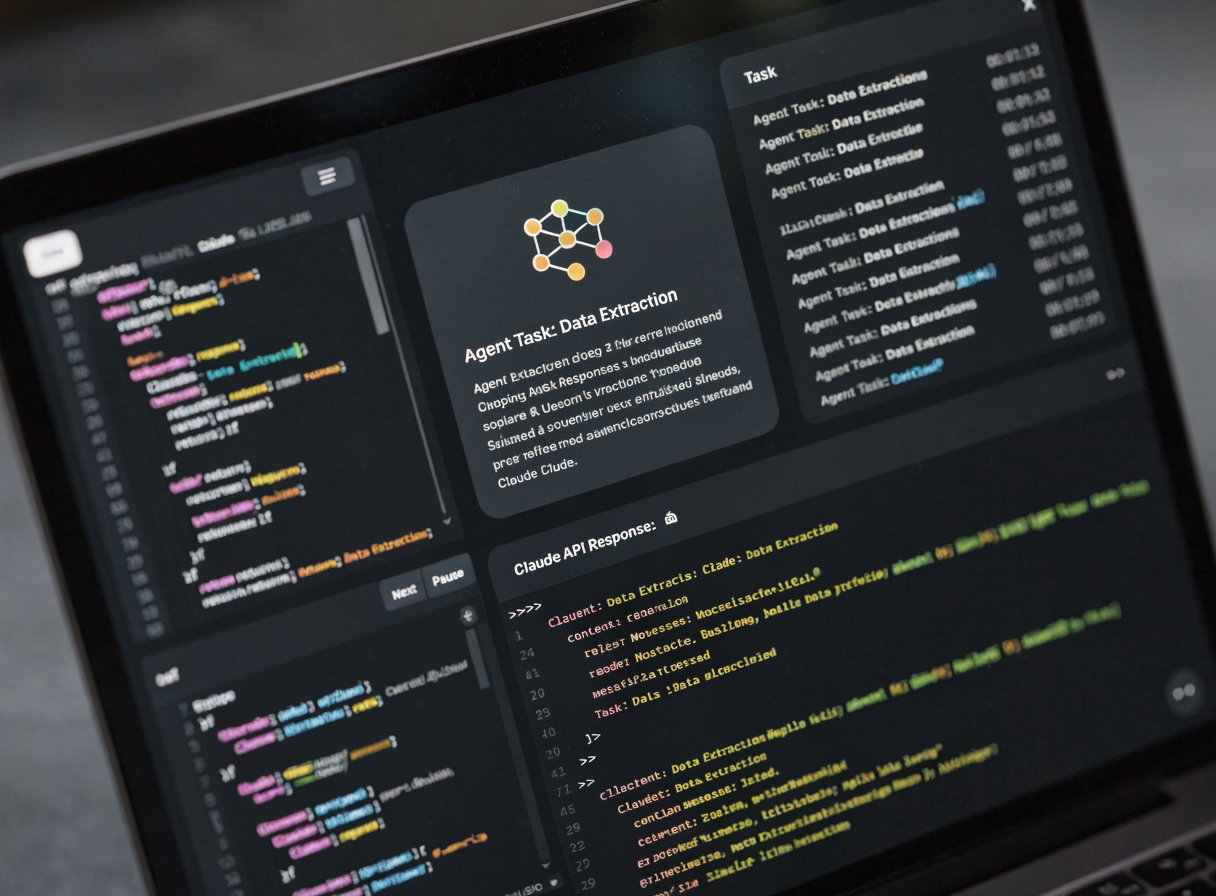
AI amplifies your team-it doesn't replace it. We identify high-impact automation: lead qualification, customer support triage, content generation, and decision automation. We implement practical AI workflows integrated with your tools, train your team to work alongside AI, and measure ROI in weeks, not months.

Service detail

AI Automation Capabilities for Dubai Businesses
AI Lead Scoring
01

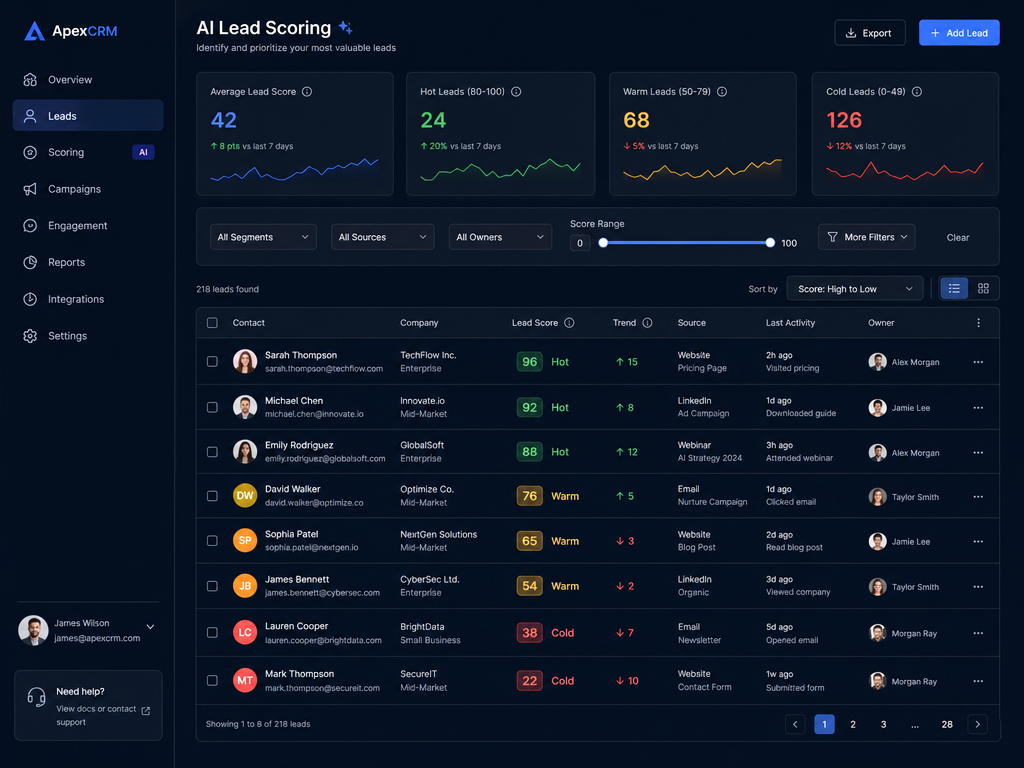
AI Lead Scoring

Qualify inbound leads instantly. Rank by likelihood to convert. Route hot leads immediately.
Content Generation
02

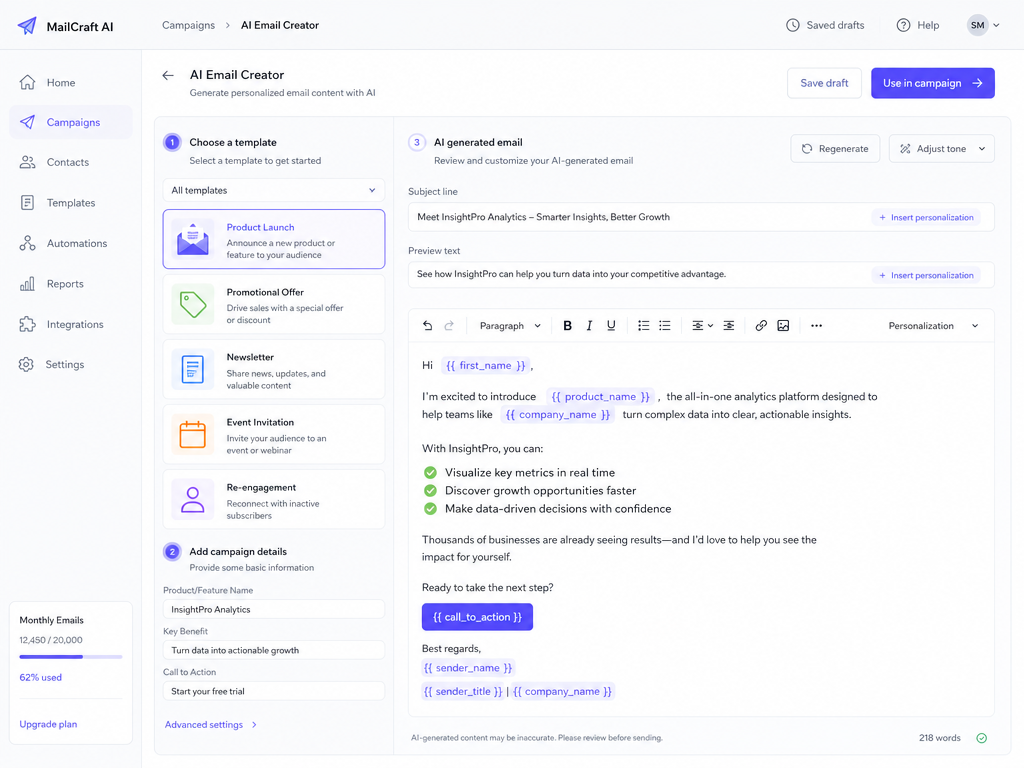
Content Generation

AI-powered email templates, proposals, and marketing copy. Personalized at scale.
Decision Automation
03

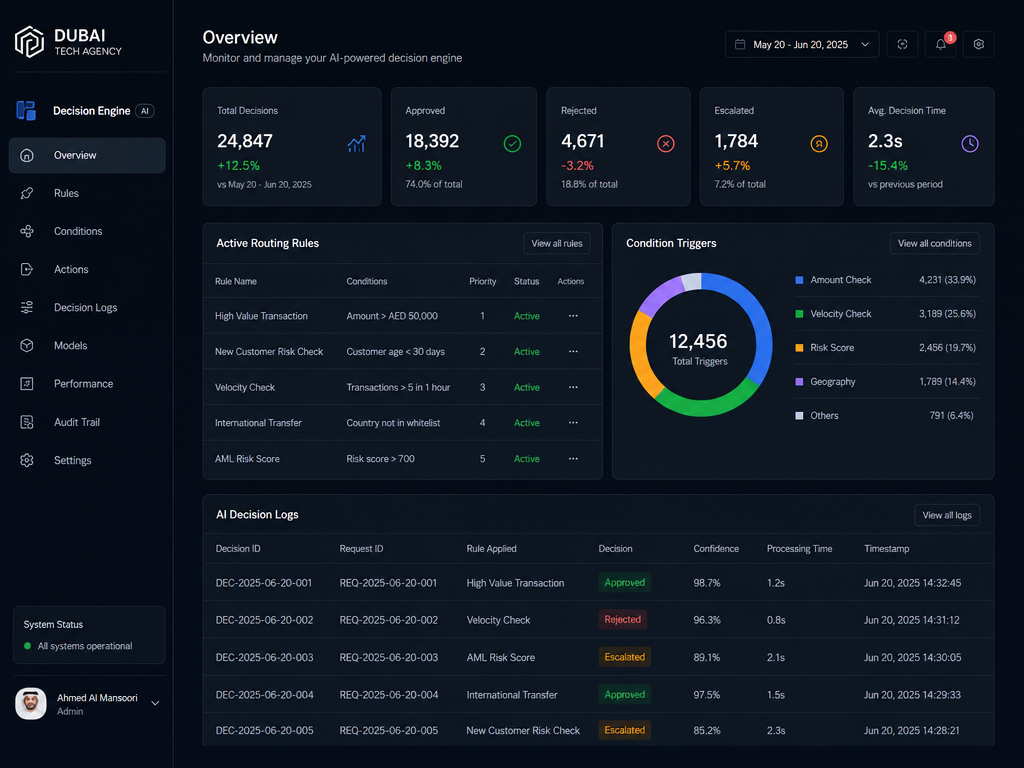
Decision Automation

Let AI make routine decisions: approve discounts, assign tasks, categorize requests.
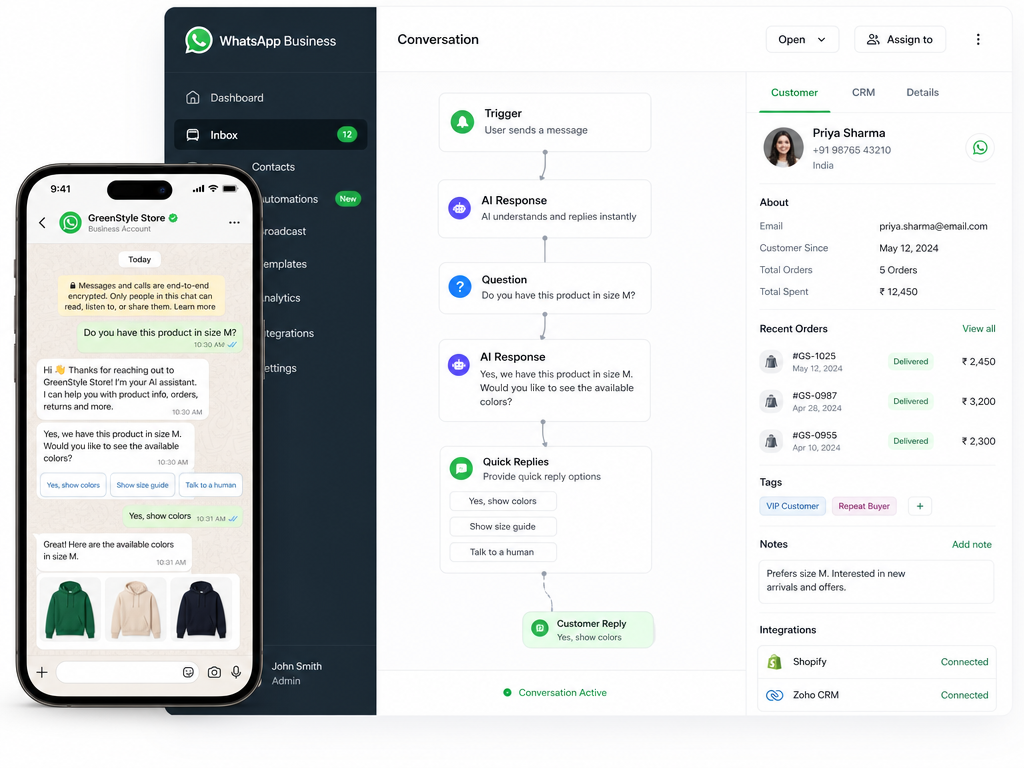
WhatsApp AI Assistant
04

WhatsApp AI Assistant

24/7 customer support via WhatsApp. Answer FAQs, qualify leads, collect information.
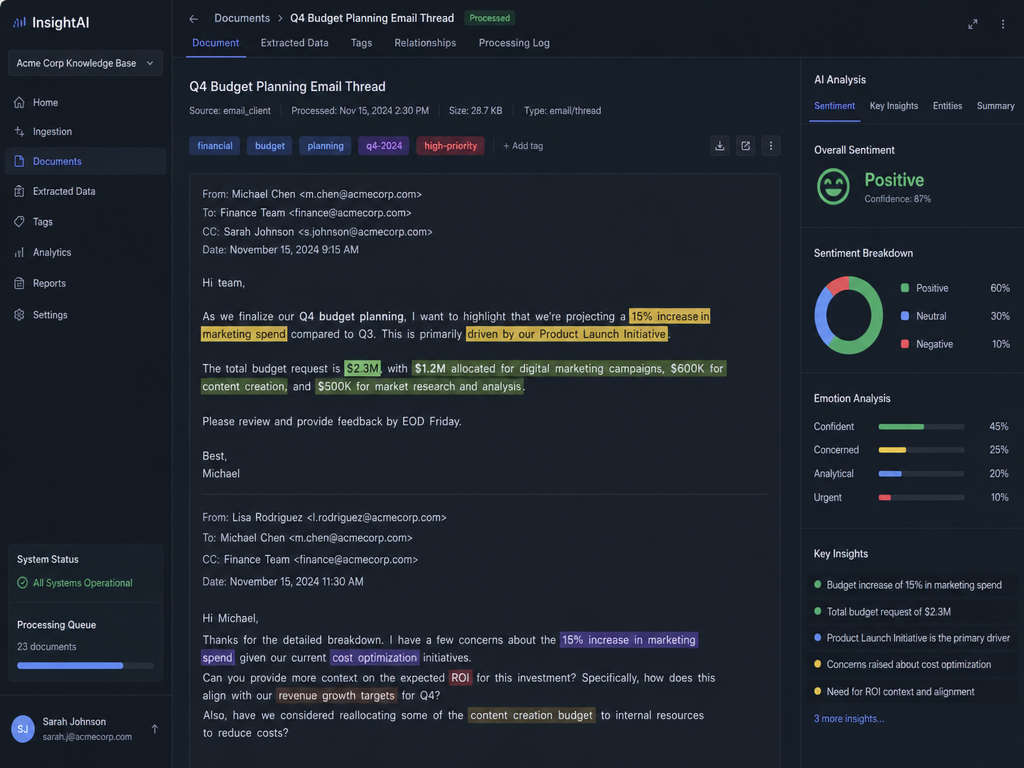
Knowledge Extraction
05

Knowledge Extraction

Extract insights from emails, documents, and conversations. Summarize and categorize automatically.
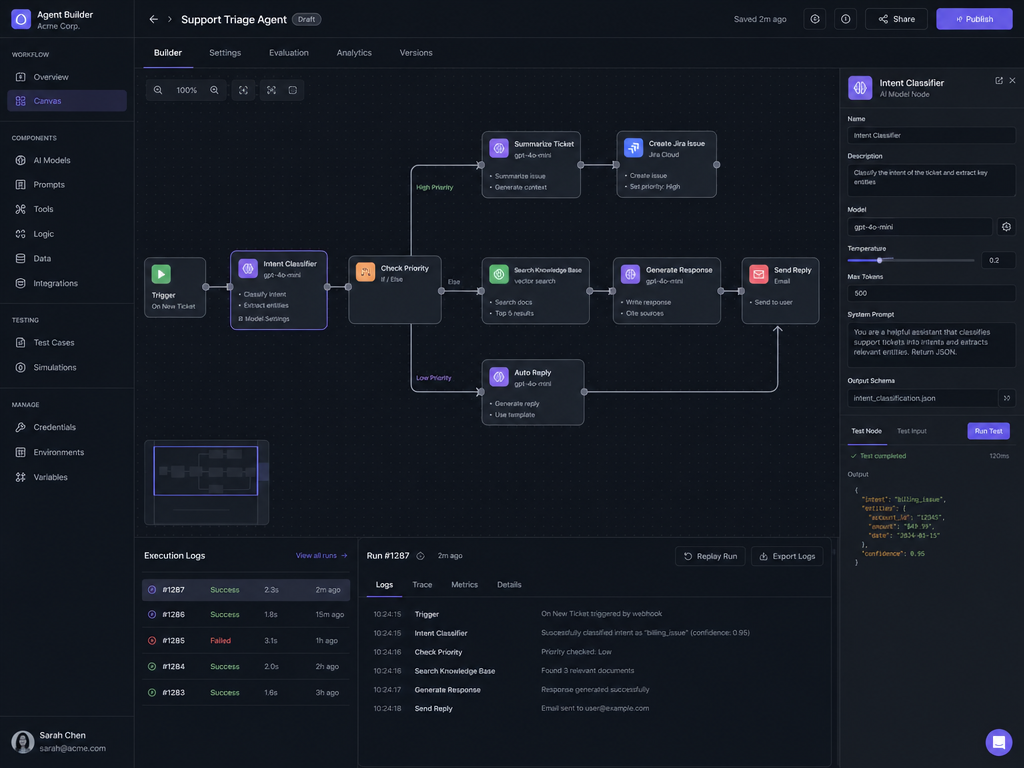
Custom AI Agents
06

Custom AI Agents

Build multi-step AI workflows for complex tasks. Combine multiple models for better results.

How We Build Your AI Automation

01

Opportunity Identification

Audit your workflows. Identify repetitive, high-volume tasks ideal for AI.

02

Use Case Design

Design specific AI solutions. Define inputs, outputs, and success metrics.

03

Model Selection & Training

Choose the right AI model (GPT-4, Claude). Train on your data if needed.

04

Integration & Automation

Integrate AI into your workflows. Connect to CRM, email, WhatsApp, Slack.

05

Testing & Optimization

Test with real scenarios. Optimize prompts and monitor quality and accuracy.

Want this running in your business?

30-minute call. We map your current process and show you exactly what the automated version looks like.

Send your requirements

AI isn't about robots taking jobs. It's about giving your best people back their time. Eliminate the repetitive work so your team can focus on what actually matters:relationships, strategy, and growth.

We make AI practical, measurable, and integrated into how you actually work, from enterprise workflows to AI automation for small businesses that can't spare a headcount.

Most AI automation agencies in this market resell a chatbot platform and call it a deployment. We are one of the few AI automation companies here that builds the integration layer as well: the model, the workflow it triggers, and the systems it writes back to.

AI automation and robotic process automation are not the same thing, and the difference decides what we build. RPA follows fixed rules across systems that were never designed to talk to each other: it clicks, copies and pastes exactly as instructed, and it breaks when a screen moves. AI-driven automation reads intent, handles messy input and makes a judgement, which is what you need when the input is a customer message rather than a structured file. Artificial intelligence and automation work best combined: deterministic steps where the rules are fixed, a model where the input is human.

That combination is what we deploy across functions and industries. Accounts payable automation with AI reads invoices in whatever format the supplier sends and matches them to purchase orders without a template per vendor. AI in warehouse automation handles stock reconciliation and exception flagging rather than the robotics itself. AI-driven test automation writes and maintains the regression suites that break every release. AI automation in agriculture, logistics and field services usually comes down to the same pattern: a model reading unstructured input at the edge, a deterministic workflow acting on it.

Not sure whether your business needs a deterministic workflow engine or a reasoning AI agent? We break down exactly when each one wins in our guide to n8n vs Claude agentic AI for Dubai businesses. Considering an AI voice agent for outbound calling? Read the questions to ask first, since voice is often the wrong channel for the job.

Results AI Automation Delivers

70%

Time Savings on Repetitive Tasks

4 hours

Setup Time (Most Tasks)

100+ workflows

AI Automations Deployed

1000s

Hours Saved for Clients

Why choose GoDesign

Why Choose Us

  • AI-powered lead scoring and qualification
  • Automated content generation and personalization
  • AI integrations with CRM and communication tools
  • Custom AI agents for repetitive knowledge work

Who this service is for

Who It’s For

  • Sales teams spending hours qualifying leads manually
  • Businesses wanting to use AI but unsure where to start
  • Customer support teams overwhelmed with repetitive queries
  • Marketing teams needing personalized content at scale

Sales Leader
What Clients Say
"The AI automation we built has been a game-changer. Leads get qualified instantly now instead of sitting in our inbox for days."

Sales Leader

VP of Sales · B2B SaaS Company

AI Automation FAQs

Yes, and in this market it is often the deciding feature. A chatbot in Arabic is not an English bot with translation bolted on: dialect matters (Gulf Arabic differs from Modern Standard in how customers actually type), right-to-left rendering has to work in the chat interface, and mixed Arabic-English messages are the norm rather than the exception in the UAE. We build bilingual conversational AI chatbots that detect the language of the incoming message and reply in kind, on WhatsApp, web chat and Instagram, with the same knowledge base behind both languages.

The useful ones do four jobs: answer repeat questions from your real documentation instead of a scripted tree, qualify enquiries by asking the questions your salespeople ask, book or reschedule appointments against live availability, and hand over to a human with the full conversation attached. Chatbot artificial intelligence examples from our own builds include a clinic bot that handles insurance eligibility questions, a property bot that qualifies budget and handover timeline before an agent calls, and a support bot that resolves order-status questions without a ticket. What none of them do well is open-ended sales conversation, which is why the handover path matters as much as the bot.

Handoff is the part most deployments get wrong. Ours triggers on three conditions: the customer asks for a person, the bot's confidence drops below a set threshold, or the conversation hits a topic flagged as human-only (complaints, refunds, anything contractual). When it fires, the conversation moves to a shared inbox or your CRM with the full transcript, the customer is told a person is joining, and the bot stops replying on that thread until it is released back. Silent handoffs where the customer repeats themselves to a human are the single biggest source of bad chatbot experiences.

We build on whichever platform fits the channel and the data. For WhatsApp-first businesses that usually means the WhatsApp Business API with a custom agent layer; for web chat we build the interface ourselves so the chatbot UI matches your site rather than looking like an embedded widget from another company; for multi-channel we use platforms like Respond.io or Botspace as the inbox with our automation behind it. We also build on Telegram where the audience is there: a chatbot on Telegram is simpler to deploy than WhatsApp (no template approval, no 24-hour window) and is common for community, crypto and developer-facing products. We are not tied to one vendor, and we will tell you when an off-the-shelf chatbot app covers your case for less than a custom build.

AI automation works best for repetitive, high-volume, rule-based tasks where the decision criteria are clear. Ideal candidates include: lead qualification (screening based on company size, industry, budget), email categorization (sorting support emails by type), FAQ answering (providing standard responses to common questions), data extraction (pulling information from documents), content summarization (condensing long documents), and routine content generation (product descriptions, social posts). AI is also good for initial triage (flagging important emails for human review, ranking leads by fit) but typically should escalate complex or high-stakes decisions to humans. Tasks with subjective decisions, high-consequence errors, or novel situations should retain human judgment.

Modern AI like GPT-4 and Claude is impressive but not perfect. It can hallucinate (make up information), misunderstand context, or give incorrect answers. For high-stakes decisions (approving contracts, final customer responses, financial decisions), AI should suggest options and escalate to humans rather than decide autonomously. AI works best in roles where mistakes are costly but not catastrophic: suggesting responses for customer support (human approves), qualifying leads (human verifies), or drafting content (human edits). We design AI systems with guardrails: confidence scores (flag low-confidence responses), fact-checking steps (verify against known data), and human review for uncertain cases. The ideal model is: AI handles routine/clear-cut 90%, humans handle exceptions/edge cases 10%.

Data privacy is non-negotiable. We implement multiple safeguards. First, data processing location: whenever possible, we process data on your infrastructure (not cloud services) to keep it private. For required cloud services, we use contractual agreements ensuring data isn't used for training external models. Encryption is mandatory: data is encrypted in transit (HTTPS) and at rest (database encryption). Data minimization: only share necessary data with AI services, never share unnecessary fields. Anonymization: when training AI on historical data, we remove identifying information. We follow GDPR, HIPAA (if healthcare), and local regulations. For sensitive data (healthcare, financial, personal information), we discuss requirements upfront and may recommend on-premises AI solutions or specialized privacy-preserving techniques.

AI automation pricing depends on complexity and volume. Simple automations (single task like FAQ answering): AED 1,300-2,600 initial setup plus API costs (typically AED 520-1,300/month). Moderate systems (email categorization + lead scoring + CRM integration): AED 2,600-5,200 setup plus AED 1,300-3,900/month. Complex AI agents (multi-step workflows, custom model tuning, heavy API usage): AED 5,200-13,000+ setup plus AED 3,900-13,000/month. API costs scale with usage: 10 emails/day costs far less than 10,000 emails/day. ROI is typically 3-6 months; if you save 20 hours/week of manual work, that's usually AED 1,300-2,600/month in labor savings justifying the investment.

Yes. We integrate AI with HubSpot, Zoho, Salesforce, Slack, WhatsApp, email systems, and custom applications. Integration points: AI can read data from your CRM (company info, lead history) to inform decisions, write back results (update lead scores, create notes), trigger workflows (when AI detects a qualified lead, create a task), and communicate with your team (post alerts to Slack, send emails with AI-generated content). Most integrations use APIs (secure connections between systems). Example: when a new lead arrives in HubSpot, AI automatically: analyzes the company and lead info, calculates a qualification score, adds notes to the lead record, and notifies your sales team via Slack if qualified. This requires zero manual work.

AI hallucination (making up information) is a known limitation. We mitigate it through: fact-checking (verifying AI responses against your data), confidence scores (flagging low-confidence answers for human review), guardrails (restricting AI output to specific options), and human review workflows (complex decisions go to humans). Example: when AI generates customer support responses, we set a confidence threshold-only responses above 90% confidence are sent automatically, below 90% are routed to a support agent. We monitor all AI outputs: log errors, track accuracy metrics, and adjust the system based on failures. No AI system is 100% accurate, but proper safeguards make the error rate acceptable for your business.

Different models have different strengths. GPT-4 is excellent for complex reasoning and analysis but costs more. Claude is strong for nuanced writing, long-form content, and instruction-following. Specialized models like Hugging Face's models work well for specific tasks (sentiment analysis, named entity recognition). We evaluate your use case: if you need understanding context and nuance, Claude often wins. For reasoning and analysis, GPT-4. For cost-sensitive high-volume tasks, smaller models. For your data and requirements, we test multiple models and recommend the best price/quality tradeoff. Most of our clients use Claude or GPT-4. As models improve (new releases happen monthly), we'll recommend upgrades if beneficial.

Yes, AI can significantly reduce support workload. We implement: email categorization (automatically route support emails by type), template-based responses (for common questions, AI drafts appropriate responses), escalation (complex issues go to human agents), and learning (as your team corrects AI responses, it improves). Example workflow: customer email arrives, AI categorizes it (billing question, technical issue, complaint), generates response based on your past answers, routes to appropriate team member who can refine/send, or auto-sends if confidence is high. Benefits: support team spends time on hard problems, routine issues are handled instantly, response time drops from hours to minutes. Most teams see 30-40% reduction in response time and 50%+ reduction in first-response time for routine issues.

We provide AI with business context in several ways. Knowledge base: your existing documentation, FAQs, past responses (few-shot learning where we show AI examples). Company context: your business description, product details, service offerings, values. Historical data: past customer interactions, decisions made, outcomes. Business rules: pricing, policies, exceptions. Fine-tuning: for heavy usage, we can fine-tune a model on your data (improve accuracy to your specific domain). This context is provided as prompts (instructions) or as training data. The more examples you provide, the better AI performs. We recommend starting with documentation and past examples-most improvement comes from the first 50-100 examples. As AI learns from your feedback, accuracy improves over time.

Yes, AI can significantly speed up contract review. AI can: summarize contracts (extract key terms, obligations, timeline), flag unusual terms (warn about non-standard clauses), check against templates (identify deviations from your standard), and suggest red flags (highlight risky language). AI is not a replacement for lawyers-it's a lawyer's assistant. AI might miss subtle issues that matter in your specific context. Ideal workflow: AI does initial review and summary, lawyer reviews AI's findings plus checks high-risk sections, contract is finalized. This saves 30-50% of review time by handling routine analysis, letting your lawyer focus on negotiation and risk assessment. We integrate AI review with contract management tools so summaries and flags are stored with the contract.

ChatGPT is a general-purpose tool-you ask it questions and get responses. It doesn't connect to your data, doesn't know your context, and requires manual interaction. Custom AI automation is different: it's purpose-built for your workflow, integrates with your tools, runs automatically without manual input, and has access to your business data. Example: ChatGPT can draft a customer email if you ask it. Custom AI watches for incoming support emails, categorizes them, accesses your customer history from the CRM, drafts responses tailored to that specific customer, routes appropriately, or auto-sends. ChatGPT requires human involvement for each task. Custom AI handles hundreds daily automatically. ChatGPT is great for exploration and one-off tasks. Custom AI is for operational automation.

Absolutely. AI lead scoring is one of the highest-ROI AI uses. We build models that analyze: company firmographics (size, industry, location, funding), lead demographics (job title, seniority), behavioral signals (website visits, email opens, content downloads), and fit against your ideal customer profile. AI then ranks leads by conversion probability. Example: of 1,000 leads, AI identifies top 100 most likely to convert. Your sales team focuses on those 100 instead of all 1,000. Results: close rate improves by 20-30%, sales cycle shortens, and team time is spent productively. Accuracy improves as you provide feedback (which leads actually converted?). We integrate lead scoring into your CRM so reps see scores and prioritize automatically.

Pre-trained models like GPT-4 work immediately without any training on your data-they leverage training on billions of examples and work out of the box. However, accuracy improves when provided with your context and examples (this is called few-shot learning-showing the model examples of what you want). Initial improvement happens in days (as we provide your documentation). Fine-tuning (training a model specifically on your data) takes 1-2 weeks and requires 50-100+ examples. Continuous learning: as the system runs, we log errors and use that feedback to improve accuracy over time. Most improvement comes early: first 10 examples help enormously, 50 examples is usually sufficient for good accuracy, 100+ examples provides marginal additional improvement.

We monitor AI accuracy continuously. We log: each decision the AI makes, outcomes, and any errors. When error patterns emerge, we debug by reviewing failures: was the AI confused about context? Missing information? Did its training data have gaps? We then fix by: refining prompts (clearer instructions), adding guardrails (constraining outputs), improving context (providing more business data), or adding human review steps (for uncertain cases). We also adjust thresholds: lower confidence thresholds to route more uncertain cases to humans. Most errors decline as the system runs because we continuously improve based on failures. We set SLAs: if error rate exceeds a threshold, we escalate and iterate until fixed.

Yes, and it's one of the fastest wins. We generate: unique descriptions per product (avoiding duplicate content), personalized by attributes (size, color, material), optimized for SEO (including relevant keywords naturally), and in your brand voice (trained on your past descriptions). AI generates 100+ descriptions in minutes versus hours of manual writing. Quality: AI-generated descriptions are usually 80-90% there-they need human editing for polish but the heavy lifting is done. Process: AI generates batch, team reviews and approves (takes 20% of the time it would take to write from scratch), publish. Ecommerce benefits: faster product launches, scalable catalog expansion, consistent quality, and better SEO. We recommend pairing AI generation with human review to ensure quality and brand alignment.

Privacy requires multiple safeguards. Data processing: never send sensitive customer data to external APIs unless necessary. If you must use external APIs, use anonymized/pseudonymized data (remove names, emails, identifying info). Data location: process data on your infrastructure when possible. Encryption: all data in transit (HTTPS) and at rest (database encryption). Access control: limit who can see what data. Data retention: delete data once its purpose is served. Compliance by design: build privacy into the architecture from start, don't add it later. For regulated industries (healthcare, finance, government), we discuss requirements upfront and may recommend on-premises AI solutions. Customers should never feel their privacy is at risk-proper architecture ensures it isn't.

Yes. AI can handle the routine parts of onboarding, freeing your team for relationship-building. Process: welcome message (AI sends personalized greeting), information gathering (AI asks for required details via email or chat), account setup (AI configures basic settings), product education (AI sends tutorials and documentation), team assignment (AI routes to appropriate person), and next steps (AI sends calendars, intro calls). AI can also handle follow-up: check if customer completed onboarding steps, send reminders, escalate bottlenecks. Benefits: consistent experience (everyone gets same steps), faster time-to-value (new customers productive quickly), reduced support burden (routine onboarding is automated), and better retention (proactive support prevents early churn). Human team still does relationship-building and handles exceptions-AI handles the workflow.

ROI typically manifests in 3-6 months. Calculate your savings: if you save 15 hours/week of manual work at AED 350/hour (AED 5,200/month salary ÷ 160 hours), that's AED 5,250/week or AED 1,560/month in labor savings. An AI system costing AED 3,900 setup and AED 2,600/month pays for itself in 2-3 months, then provides ongoing savings. Secondary ROI: faster response times (better customer satisfaction, higher close rates in sales), fewer errors (higher quality), and staff available for high-value work (strategy, relationships, complex problems). We recommend tracking specific metrics: hours saved per week, quality metrics (error rate), and business impact (conversion rate, customer satisfaction). Most clients find that initial projections are conservative-actual savings often exceed expectations because new use cases emerge once AI is operational.

Need this service?

Share Your Requirements

Share your requirements and we will come back with the right next step, timeline, and delivery approach.

Tell us your goals

Project Brief

Start a Conversation

Tell us what you're building. We'll tell you how to make it faster.