GoDesign FZE - Dubai Digital Agency
Design

UI/UX Design Dubai, Design That Guides Users to Act

User interface and experience design that reduces friction and increases conversion.
Get a scope & quote
UI/UX Design Dubai, Design That Guides Users to Act cover

What Our UI/UX Design Service Includes

Design isn't decoration. Good design is invisible-users don't notice it because everything works exactly as they expect. Bad design, however, costs money. We design user interfaces and experiences that reduce friction, improve conversions, and feel natural to interact with. We start with research, validate with users, and deliver design systems built for development and scale.
Service detail

UI/UX Design Capabilities

User Research & Insights
01

User Research & Insights

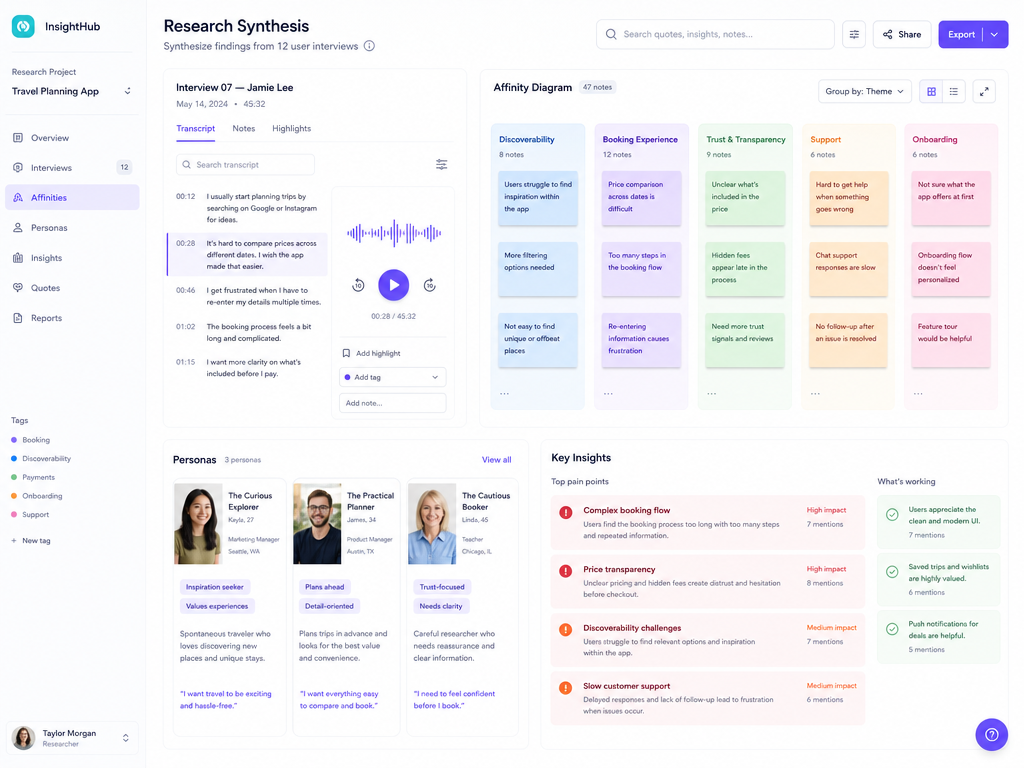
User interviews, competitive analysis, and audience segmentation. We design based on real user needs, not assumptions.
Journey Mapping & Flows
02

Journey Mapping & Flows

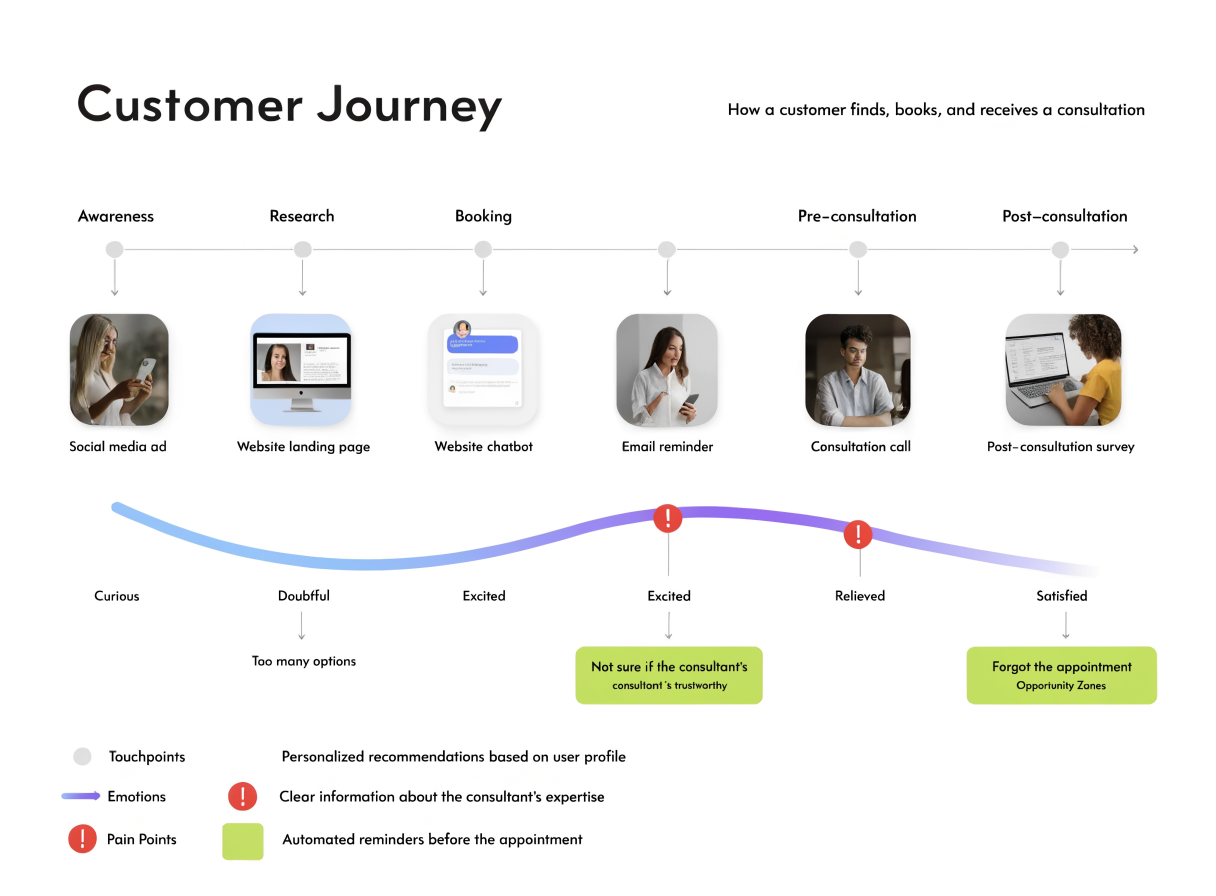
Document user journeys from discovery to conversion to retention. Identify friction points and design to eliminate them.
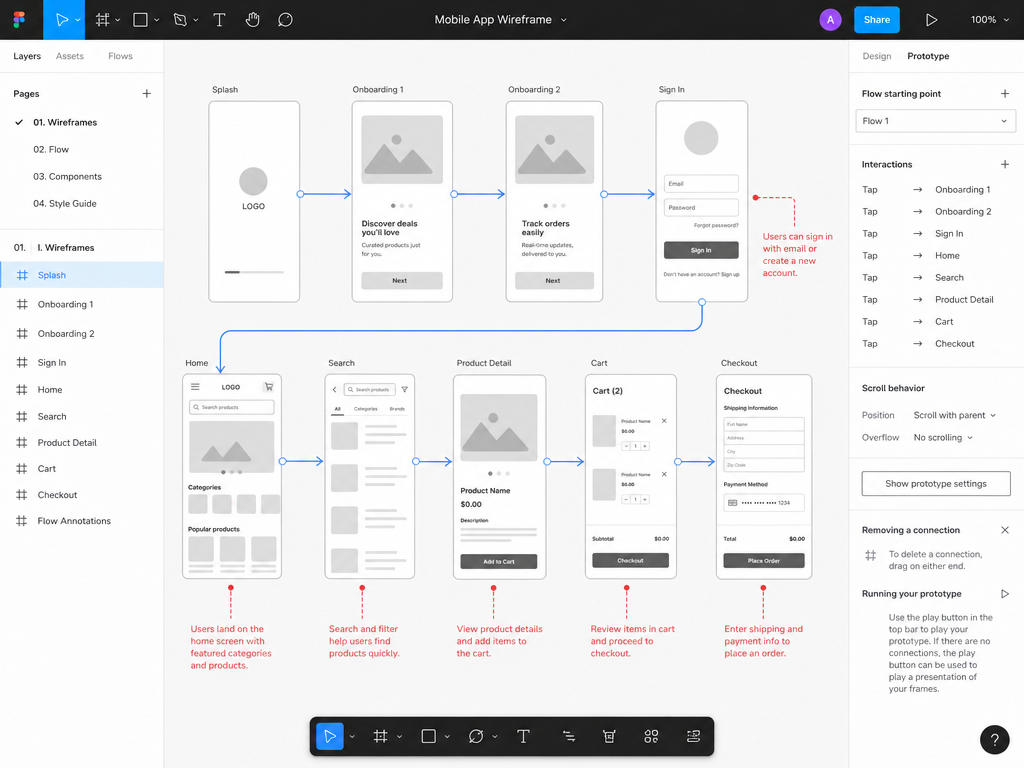
Wireframing & Prototyping
03

Wireframing & Prototyping

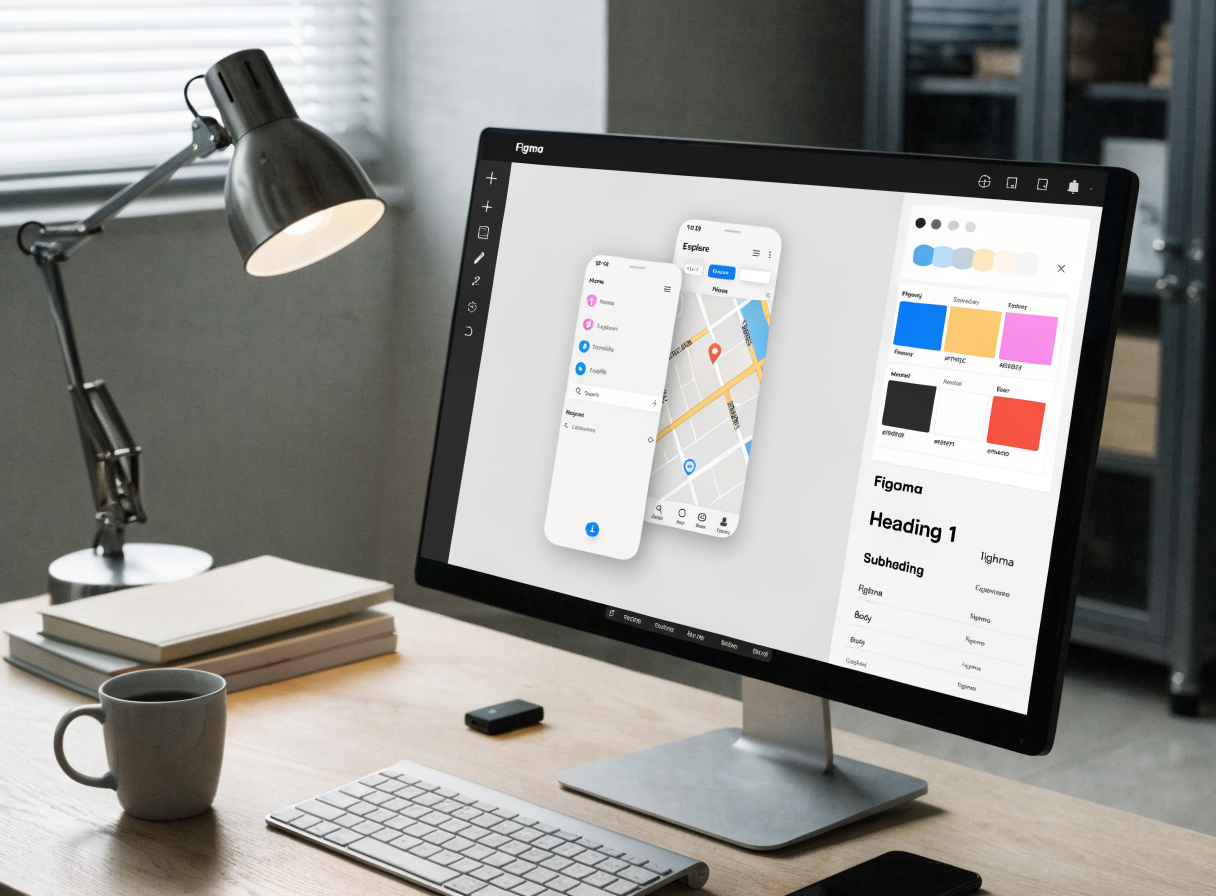
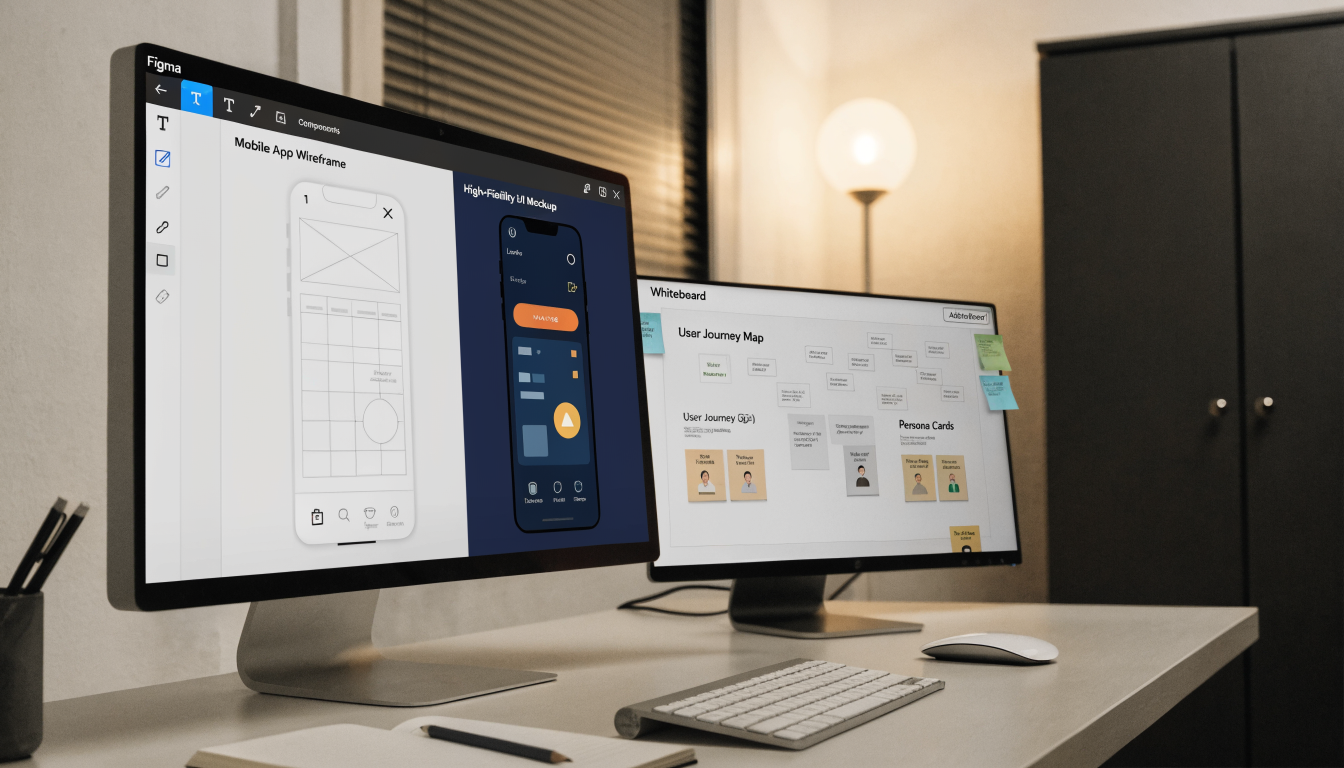
Low-fidelity wireframes for rapid iteration. Interactive prototypes in Figma. Test concepts before building.
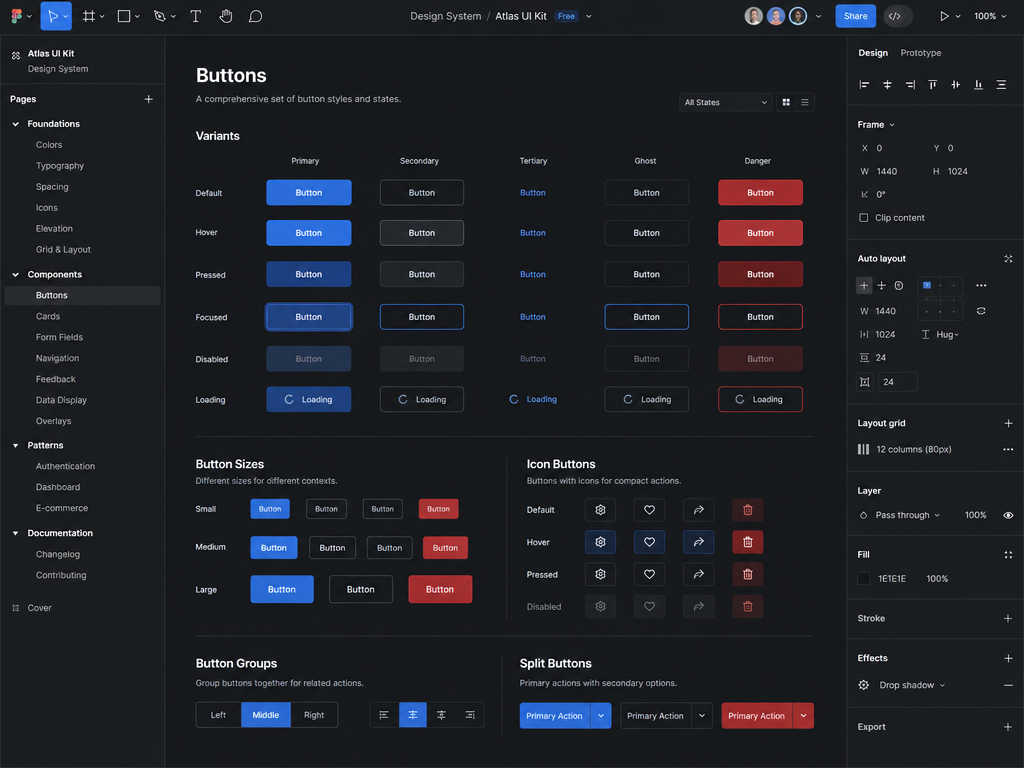
High-Fidelity UI Design
04

High-Fidelity UI Design

Pixel-perfect design systems. Consistent components. Scalable design tokens. Built for handoff to development.
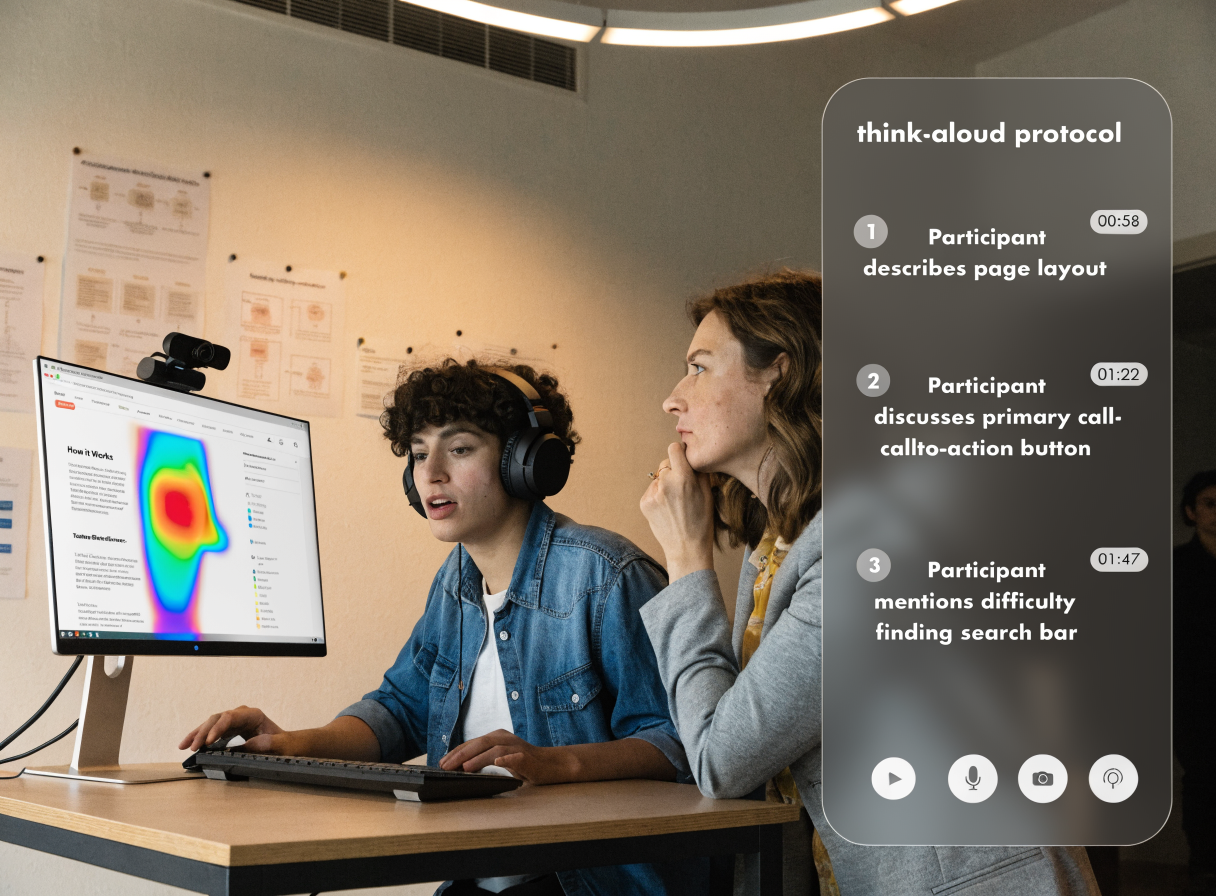
Usability Testing
05

Usability Testing

Validate designs with real users. Iterate based on feedback before development begins.
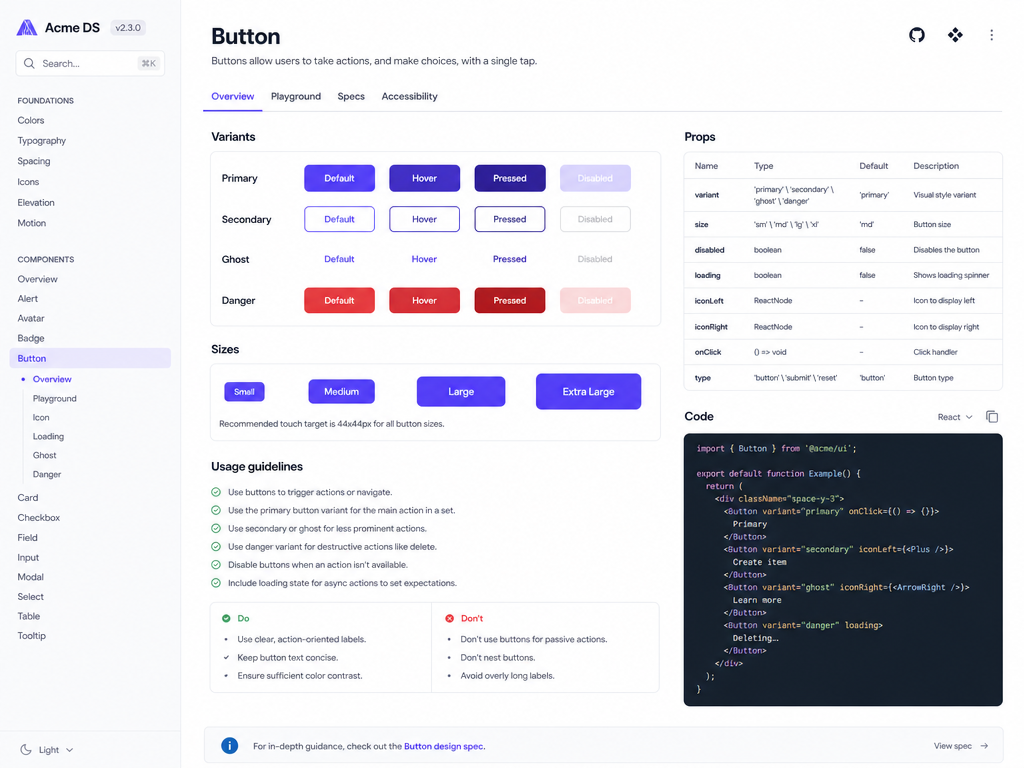
Design System & Documentation
06

Design System & Documentation

Comprehensive component library. Usage guidelines. Handoff documentation for developers. Built for scale.

Our UI/UX Design Process

01

Discovery & Research

Understand your users, business goals, and competitive landscape. Conduct user interviews and create personas.

02

Strategy & Planning

Define user journeys, information architecture, and key flows. Align design approach with business metrics.

03

Wireframing & Flows

Low-fidelity wireframes and interaction flows. Get stakeholder alignment before investing in high-fidelity design.

04

High-Fidelity Design

Detailed UI design with typography, color, spacing, and interactions. Design system components for consistency.

05

Testing & Iteration

Usability testing with real users. Refine designs based on feedback. Final handoff documentation.

Want this running in your business?

30-minute call. We map your current process and show you exactly what the automated version looks like.

Send your requirements

Bad design doesn't just look bad:it costs money. Every confusing interaction, every unclear button, every friction point is a user abandoning your product.

We design interfaces that feel natural to use. Intuitive. Beautiful. And most importantly:effective at driving the outcomes that matter to your business.

Great UI starts from a defined brand system. Pair this with our logo design and brand identity service so colour, type, and tone stay consistent from brand to interface.

What Great UI/UX Design Delivers

40%

Average Engagement Lift

3-5 weeks

Typical Design-to-Dev Timeline

50+

Design Projects Delivered

90%

Client Satisfaction

Why choose GoDesign

Why Choose Us

  • User research and journey mapping
  • Wireframes and interactive prototypes
  • High-fidelity UI design with full design system
  • Usability testing and iteration
Who this service is for

Who It’s For

  • SaaS products with high churn due to confusing UX
  • Mobile apps that need a design overhaul before launch
  • E-commerce stores with high cart abandonment
  • Enterprise tools that need a modern, intuitive interface

Nia R.
What Clients Say
"Kausar is an incredible web designer - professional, attentive, and patient. Despite delays on my end, she remained supportive and delivered a beautiful website that exceeded my expectations."

Nia R.

Executive Director · Non-Profit Organization

UI/UX Design FAQs
UX (User Experience) encompasses how your product works, how intuitive it is, and whether it solves the user's problem effectively. It includes research, information architecture, workflows, and validation. UI (User Interface) is the visual and interactive layer-colors, typography, buttons, icons, animations, and how users interact with elements. Both are essential because great UX with poor UI feels unpolished, and beautiful UI with bad UX frustrates users. We design with both lenses simultaneously, ensuring functionality is matched by visual clarity and elegance.

Absolutely yes. User research is the foundation of effective design. Research saves months of development time and significant budget by preventing designs that don't solve real problems. We conduct user interviews (talking to your actual users about their needs and pain points), competitive analysis (studying what competitors do well and poorly), user surveys (validating assumptions across a larger group), and task analysis (understanding workflows in detail). Without research, you're designing based on assumptions. With research, you're designing based on facts. This typically adds 2-3 weeks to a project but prevents costly redesigns later.

Project timelines depend on scope and complexity. Small redesigns (5-10 screens, minimal research) take 3-4 weeks. Medium projects (15-20 screens with user research and testing) take 5-7 weeks. Large, complex products (25+ screens, multiple user types, custom design system, extensive research) take 8-12 weeks. The timeline includes discovery and research, wireframing with stakeholder feedback, high-fidelity design, design system creation, usability testing, and final revisions. Each phase requires feedback cycles, so stakeholder availability can affect timeline. We break down timelines by milestone so you know what to expect.

Yes, absolutely. We design mobile-first, meaning we start with the smallest screen (mobile) and design the core functionality there, then enhance for larger screens. This forces us to prioritize what's essential and eliminate unnecessary elements. Every design we create works flawlessly on smartphones (320px and up), tablets, and desktop screens. We test across multiple devices and orientations. Mobile-first design also results in faster, more accessible experiences on all devices because we're not trying to squeeze complexity into small spaces.

Design projects include 2-3 rounds of iterative feedback built into the scope, so changes and refinements are expected. After formal design approval, additional revisions are available in two ways. Minor adjustments (color tweaks, text changes, small repositioning) can usually be done quickly at no charge if we're still in the same project phase. Major changes (new features, significant restructuring, completely new screens) are billed separately at our hourly design rate (typically AED 600-1,000/hour). We document what's included in the original scope and what would count as additional work to avoid surprises.

Design handoff is a comprehensive package designed for developers to build without confusion. You receive: a fully organized Figma file with all artboards, components, and layers clearly named; a design system with all reusable components, patterns, and variations; detailed specifications for spacing, sizing, colors, and typography; interaction and animation guidelines; responsive behavior documentation; accessibility notes and WCAG compliance annotations; icon libraries and asset exports; and a style guide document explaining design decisions. Developers have everything needed to build pixel-perfect implementations without needing to ask us questions.

Direct and measurable. Studies from Nielsen Norman Group and others show that reducing friction by 20% can increase conversions by 10-25%. Good design eliminates barriers to user action: unclear CTAs become obvious, confusing flows become intuitive, and friction points get removed. We measure this through metrics like task completion rates (can users find what they need?), time-to-action (how fast can they complete key actions?), and error rates (how many users get stuck?). In our portfolio, redesigns typically result in 30-50% improvement in conversion metrics depending on the starting point.

Success is measured against metrics we establish upfront with you. These metrics typically include: task completion rate (% of users who can complete primary tasks), time-to-action (how quickly users can complete key actions), error rate (how many clicks/steps are wrong), and user satisfaction (ratings or NPS from testing). We validate success through usability testing with real users before development, then measure again post-launch using analytics and user testing. This gives you concrete data on whether the design achieved its goals, not just opinions.

Yes, absolutely. We create designs that developers can implement incrementally without requiring a complete product rebuild. We can redesign specific user flows, prioritize updates by impact, and phase rollouts over time. This approach lets you gather user feedback on each new section, validate that the direction is right, and reduce the risk of a large relaunch. We work with your development team to determine what can be built incrementally versus what requires bigger changes. Phased rollouts are often better than massive redesigns because users adapt gradually and you can course-correct based on feedback.

Accessibility is built in from day one, not added as an afterthought. We design for WCAG 2.1 AA compliance, which means: proper color contrast (text readable by colorblind users and in different lighting), keyboard navigation (all functionality accessible without a mouse), semantic HTML structure guidance for developers, screen reader compatibility, focus indicators for keyboard users, and clear error messages. Accessible design isn't just about including disabled users-it's better UX for everyone. People use your product while driving, in sunlight, on slow connections, with one hand, and with various abilities. Accessible design serves all these users better.

Stakeholder feedback is valuable but can sometimes conflict with user needs or pull design in conflicting directions. We manage this by prioritizing feedback based on impact to user goals and business metrics rather than by opinion or hierarchy. We use data from user research to support design decisions when opinions conflict. For example, if the CEO wants a feature that user research shows confuses users, we present that data and recommend the user-centered approach. We facilitate collaborative design discussions where we help teams align on what matters most. This approach usually results in better buy-in because everyone sees the reasoning.

We do both. For one-off projects or small features, we design individual screens efficiently. For products that will grow, scale, or be maintained long-term, we build comprehensive design systems. A design system includes reusable components (buttons, forms, cards, etc.), design tokens (colors, spacing, typography), patterns and templates, usage guidelines, and documentation. Design systems save development time (developers reuse components instead of coding from scratch), ensure consistency across your product, and make future updates faster and cheaper. Systems pay for themselves after the second or third feature.

Figma is our primary design tool because it's cloud-based, collaborative, and industry-standard. Figma allows real-time collaboration, version control, component libraries, and developer handoff capabilities. For user research and validation, we use tools like UserTesting (moderated and unmoderated user testing), Maze (unmoderated testing for interactive prototypes), Hotjar (heatmaps and session recordings to understand user behavior), and Google Forms (surveys for broader feedback). The specific tools depend on project needs and your budget-all are optional and we can scope them based on your priorities.

UI/UX design projects range based on scope. Small, focused redesigns (single flow or feature, minimal research) start at AED 2,600-3,900. Medium projects (15-20 screens, user research, usability testing) range from AED 6,500-10,400. Large, comprehensive projects (25+ screens, extensive research, design system, multi-phase implementation) range from AED 10,400-18,200+. Timeline and deliverables influence cost. We provide detailed quotes after discovery that break down research, design phases, testing, and design system work. We're transparent about costs and avoid surprises.

Wireframes are low-fidelity, focusing on layout, information hierarchy, and user flow rather than visual aesthetics. Wireframes are quick to create, easy to iterate on, and good for getting stakeholder alignment on structure before investing in detailed visual design. High-fidelity designs are pixel-perfect, including all visual details: colors, typography, images, effects, and interactions. High-fidelity designs show what the final product will look like. We use both: wireframes early for structure validation, then high-fidelity designs for final implementation. This two-phase approach saves time and prevents designing the wrong structure in beautiful detail.

Yes, testing with real users is standard practice. We conduct usability testing sessions where we give users tasks and watch how they interact with your design. Testing reveals problems before development: unclear navigation, confusing CTAs, missed edge cases, accessibility issues. We typically test with 5-8 users per round (enough to find 80% of issues). Testing can be moderated (we watch and ask follow-up questions) or unmoderated (users test remotely on their own). Testing is powerful because it replaces assumptions with actual user behavior. Designs that tested well with users have 70%+ higher success rates post-launch.

Absolutely. If you have established brand guidelines, we incorporate your colors, typography, voice, and visual style into the design. Consistency across brand touchpoints strengthens recognition and trust. If your brand guidelines are outdated or don't work well for digital products, we can recommend updates that maintain your identity while improving usability. We can also create comprehensive brand guidelines if you don't have them yet. The goal is designs that feel authentically yours, not generic.

Discovery is where we understand your business, users, and goals before designing anything. It typically includes: stakeholder interviews (understanding business objectives and constraints), user research interviews (1-2 hour conversations with your actual users about their needs and pain points), competitive analysis (reviewing 3-5 competitor products to identify patterns and opportunities), current state audit (if redesigning an existing product), user persona creation (detailed profiles of key user types), journey mapping (documenting current user paths and friction points), success metrics definition (what does success look like?), and a comprehensive discovery document. Discovery typically takes 2-3 weeks and costs AED 1,300-2,600. It prevents costly design mistakes and provides direction for the entire project.

We establish baseline metrics before design work begins, then measure again post-launch. Key metrics include: task completion rate (can users accomplish core actions?), time-on-task (how long does each action take?), error rate (how many missteps do users make?), user satisfaction (NPS or satisfaction surveys), and business metrics (conversion rate, retention, revenue). We implement analytics tracking during development so you can measure these post-launch. For digital products, we can also run A/B tests comparing old vs. new design. The goal is to move from 'it looks nice' to 'it actually works better and makes money.'

Need this service?

Share Your Requirements

Share your requirements and we will come back with the right next step, timeline, and delivery approach.

Tell us your goals

Project Brief

Start a Conversation

Tell us what you're building. We'll tell you how to make it faster.