




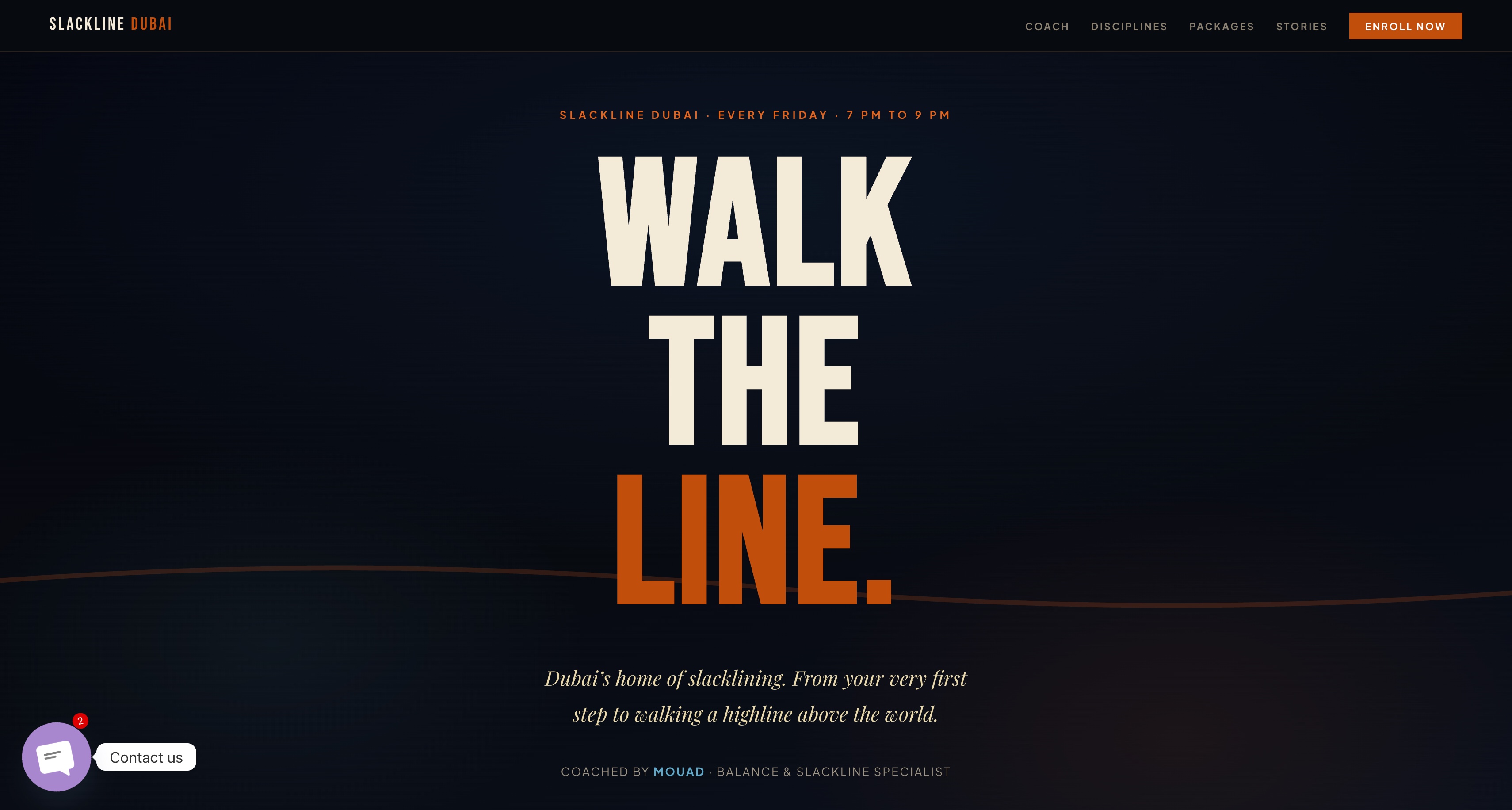
We recently worked with a movement coach in Dubai. Someone who teaches surf skate, slack line and acro yoga, runs sessions in the park, gets consistent traffic from Instagram, and is genuinely excellent at what they do. The problem was not the quality of the coaching. The problem was everything that happened after someone watched a reel and decided they wanted to book.
They would DM on Instagram. Sometimes they would get a reply in a few hours. Sometimes the next day. There was no price list anywhere that answered the obvious questions. There was no way to book directly. There was no confirmation that anything had been received. The interested person, who was ready to commit thirty seconds ago, is now in a holding pattern. In a city where there are fifteen other coaches one scroll away, holding patterns tend to end in one direction.
This pattern is not unique to that coach. It is the standard operating mode for the majority of independent fitness and movement professionals in the UAE. The skill is there. The audience is being built. The conversion infrastructure is not.
What Potential Clients Actually Do

When someone in Dubai sees a fitness or movement coach on Instagram and decides they want to know more, there is a predictable sequence. They check the bio link. If there is no link, or the link goes to a generic homepage with no clear next step, they go back to Instagram and send a DM. If the DM is not answered within a few hours, the moment has passed. They have scrolled on. They have found someone else. They did not lose interest in what you offer. They lost patience with the process of trying to access it.
Mobile traffic drives fitness coach discovery. Over 76% of fitness website traffic comes from mobile devices, with most potential clients searching and browsing directly from their phones between sessions, during commutes, or late at night when the impulse to do something about their fitness is highest. A site that is not mobile-optimised, loads slowly, or buries the booking option three pages deep does not get a second chance. A non-responsive website increases bounce rates by up to 67%, meaning two thirds of the people who find you leave before reading a single line about what you offer.
The conversion numbers are stark:
| Metric | Impact |
|---|---|
| Online booking system | +35% conversion |
| Free trial / intro offer | +27% conversion lift |
| Clear pricing on page | -15% abandonment |
These are not small improvements to an already-working system. For a coach running entirely on referrals and DMs, they are the difference between a business that requires constant manual effort to fill a calendar and one that fills it while the coach is teaching.
The Confusion Problem
The coach we worked with faced something else that many multi-discipline movement professionals face: they offer several things and they are not sure how to present them without confusing people.
Surf skate. Slack line. Acro yoga. Each with different skill levels, different session formats, different goals. How do you put all of that on one website without it looking like a catalogue nobody asked for?
The answer is not to list everything. The answer is to lead with the transformation, what the client gets, and organise the disciplines as pathways toward it rather than products in a menu.
In this coach's case, the unifying thread was balance. Not as a metaphor but as a physical discipline and philosophy of movement that runs through everything they teach. Every discipline they offer either builds balance, develops it in a different context, or applies it at a higher level. That is the story the website tells. The specific sessions, private surf skate, group slack line, acro yoga fundamentals, are the product options underneath that story.
This structure solves the confusion problem because the potential client does not need to understand the difference between surf skating and slack lining before they book. They just need to understand what they are trying to achieve, and then find the format that fits their schedule, budget, and starting point.
The three-page structure that works for an independent movement coach looks like this: a home page that tells the story and leads to a clear next action, a services page that presents each format with honest pricing and a booking option, and an about page that builds the personal trust that makes someone choose one coach over another. That is it. Not a blog, not a shop, not five separate sub-sites. Three pages that do one job each.
What Happens Without a Booking System
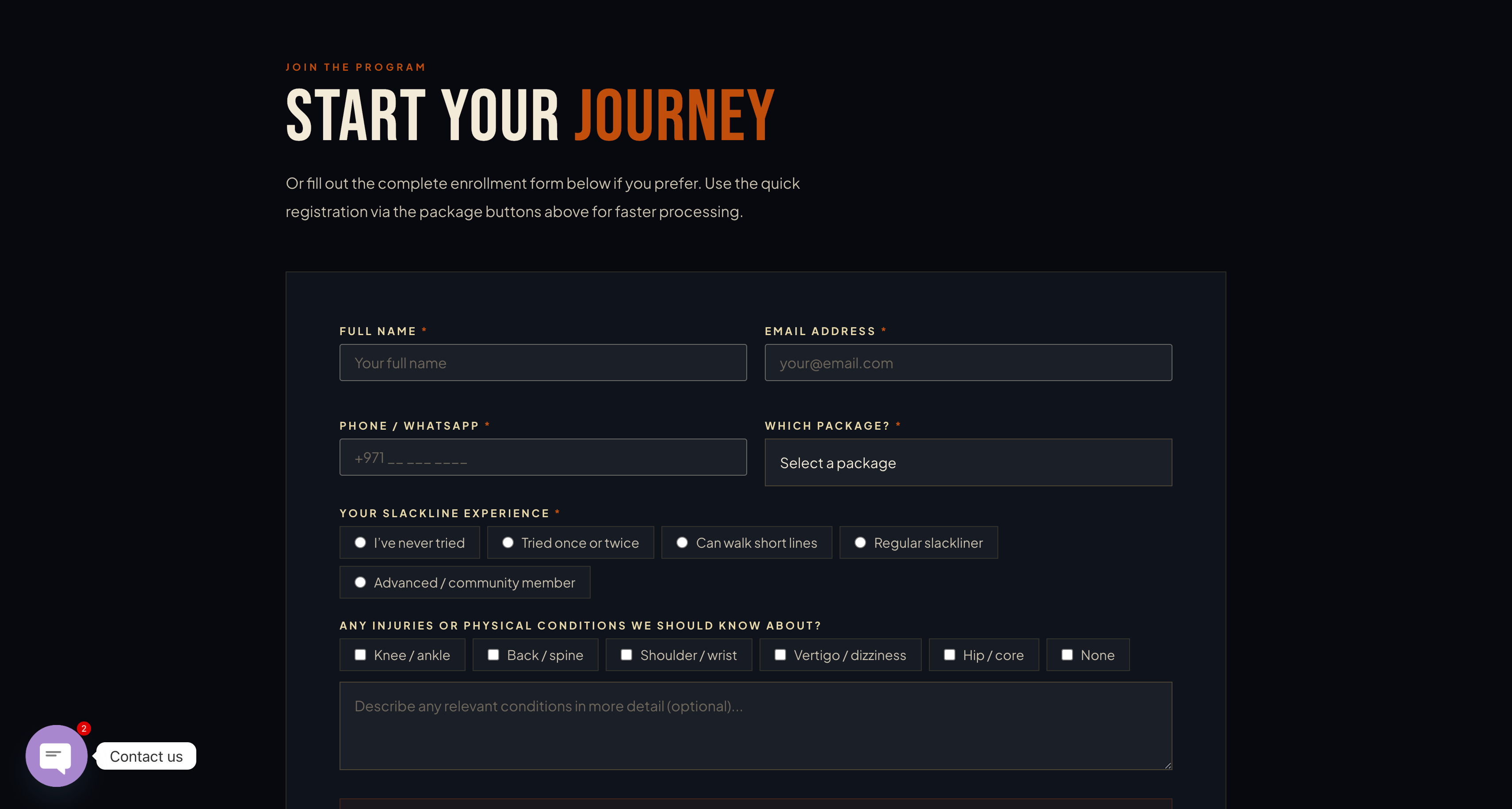
The coach's existing workflow before we built the site: someone DMs, the coach responds, they go back and forth to find a time, the coach notes it somewhere, the client may or may not show up, payment happens in cash or bank transfer after the session, there is no record of the client's details, and when the coach wants to fill a cancellation slot at short notice there is no list to contact.
This is the standard setup for independent coaches in Dubai. It works until it does not. Until the coach is managing fifteen clients across different formats and the mental load of tracking all of it manually starts eating into the energy that should go into teaching.
A booking system with calendar integration reduces the weekly administrative burden by 15 to 25 hours for service businesses of this size. For a coach, that time comes back as sessions, as rest, or as the energy to actually grow the business rather than just service it.
Booking System Essentials for Fitness Coaches
| Feature | Benefit |
|---|---|
| Live calendar integration | Real-time availability |
| Multiple session formats | Organize different class types |
| Automated confirmations | 24-hour reminders reduce no-shows by 40% |
| Payment at booking | Stripe integration, no cash handling |
| Client follow-up | Post-session feedback collection |
The specific setup that works for a movement coach is not complicated. A booking page connected to a live calendar. Three to four session formats with clear pricing and package options. Stripe for payment at booking, not after the session. Automated confirmation to the client and the coach. A 24-hour reminder that reduces no-shows, which typically run at 20 to 30% for fitness services without reminders.
None of this requires a developer to manage once it is built. The coach updates availability in their calendar. Bookings come in. Payments are processed. Reminders go out. The coach shows up and teaches.
The Instagram-to-Website Gap
Most movement coaches in the UAE are building audiences on Instagram with genuine skill. Reels of sessions, student progress, the progression from beginner to advanced. This is exactly the content that attracts the right kind of client. The problem is what happens next.
Instagram is not a booking system. It is an awareness tool. The gap between awareness and conversion, between someone watching a reel and becoming a paying client, is almost always a website problem.
When someone goes from an Instagram reel to a link in bio that takes them to a clear page with a visible offer, a price, and a one-click booking option, the conversion rate on that traffic is meaningfully higher than the same traffic landing on a generic homepage or a Linktree with five ambiguous options.
Client testimonials and success stories on a fitness website increase credibility by 23%. For a movement coach whose entire credibility is built on demonstrable physical progress, this is the natural bridge between Instagram and conversion. The student's journey from day one to their first successful slack line cross, documented and presented on the website as social proof that the method works.
See how we approach web development for service businesses →
The Pricing Conversation Nobody Wants to Have on Instagram
One of the most consistent findings in fitness conversion research is that hiding pricing costs more clients than it saves.
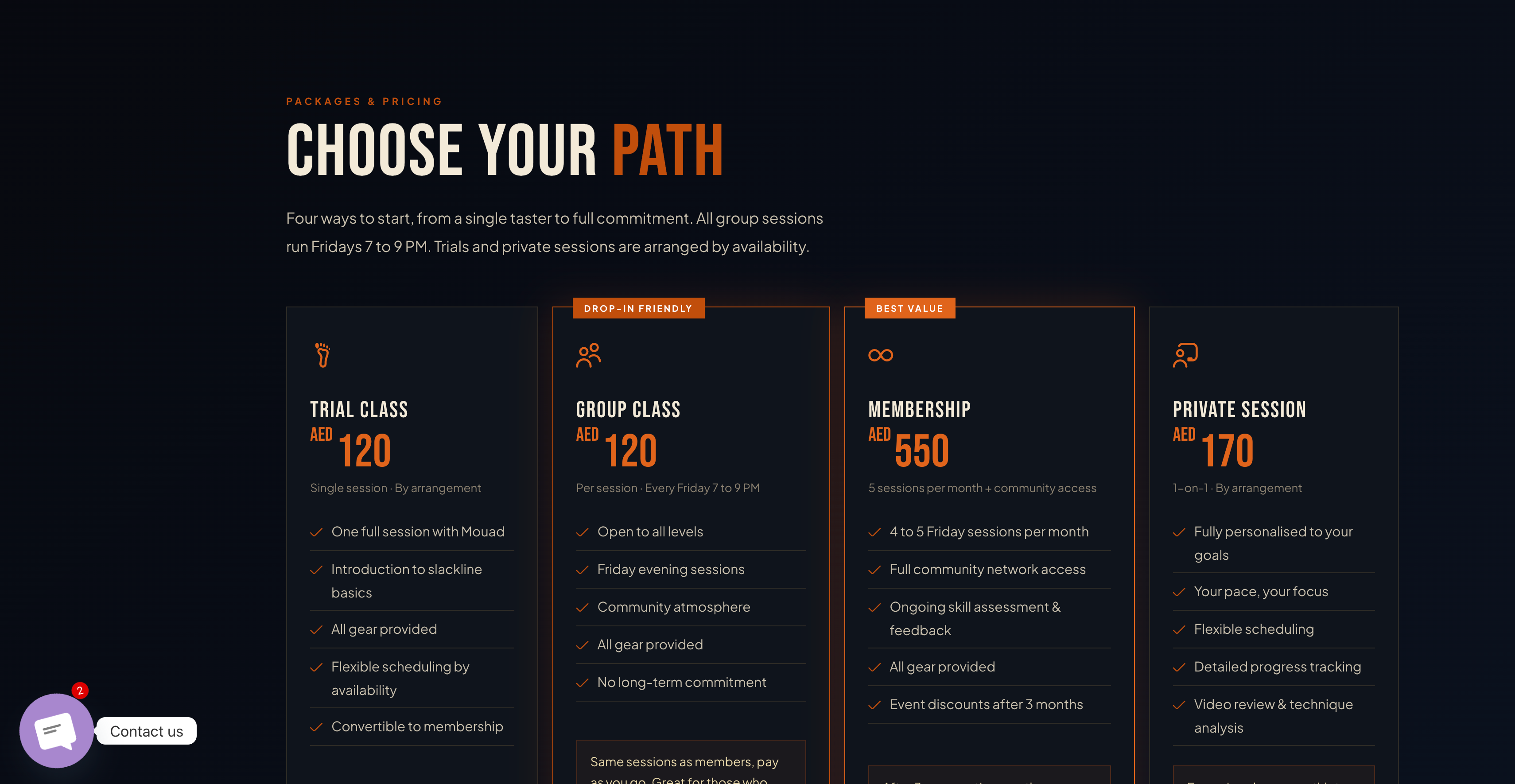
The logic behind "DM for rates" is understandable. Coaches worry about losing clients on price before they can communicate value, and they want the chance to explain before a number becomes a barrier. The reality is the opposite. Clear pricing on a service page reduces abandonment by 15% because it removes the friction of having to ask. Most people who send a DM asking for prices are not going to become clients. The people who book directly after seeing a clear price and a clear offer are.
For a movement coach with multiple formats, private sessions at one rate, group classes at another, programmes at a third, the website is the right place to lay this out clearly. Three options, three prices, three booking buttons. The client self-selects. The coach does not spend 20 minutes in a DM thread qualifying someone who was never going to pay for private coaching.
What We Built and Why It Worked
For the movement coach we worked with, the build came down to four things.
1. Landing pages for each discipline that spoke directly to the person who would search for it. Not a general fitness page but a specific page for someone who wants to learn surf skating in Dubai, structured around what they would achieve and how they would progress.
2. A unified services page that connected all disciplines through the balance philosophy, presenting the coach's approach as a movement system rather than a list of activities.
3. Booking flow integration with their existing calendar, Stripe for deposits, and automated WhatsApp confirmations through the number the coach already used for client communication.
4. A student progress section that drew directly from the coach's existing Instagram content, existing videos and photos repurposed as proof of method rather than just social content.
The result was a site that an interested person could land on from an Instagram ad at 11pm, understand the offer in 30 seconds, book a session without speaking to anyone, pay a deposit, and receive a confirmation before going to sleep. The coach woke up with a new booking in their calendar.
That is what a website is supposed to do.
See how CRM fits into client management at scale →

What This Costs to Get Right
A purpose-built website for an independent movement coach or yoga instructor, landing page, services page, booking integration, payment, automated confirmations, is not a six-month project. For an independent practitioner, a properly scoped build takes two to three weeks and costs a fraction of what a single month of manual admin and missed bookings costs over a year.
The question is not whether a coach can afford to build it. It is whether they can afford not to, while they continue sending people to a DM thread that half of them never send.
Ready to Stop Losing Clients Before They Book?
Teaching yoga, surf skate, slack line or any movement discipline in the UAE? We build websites and booking systems specifically for independent coaches and small studios, designed to convert Instagram traffic into confirmed sessions without a single DM required.
Talk to us about your coaching website →