
You search “digital marketing companies near me” after another month of uneven lead flow, a website that looks fine but converts poorly, and agency proposals packed with the same empty claims. Full service. Performance focused. Strategic. None of that tells you who can fix your pipeline, your tracking, or your cost per lead.
The right question is simpler. Which agency fits your business model, budget, and technical gaps right now?
That is how you should read this list. Not as a popularity contest, and not as a collection of polished sales decks. Use it as a decision framework. Some agencies are stronger in SEO. Some are better at CRM and lead management. Others can handle paid media, content, or social well but struggle to tie activity back to revenue.
If your site traffic is decent but enquiries are weak, start by reviewing the conversion issues on your own side first. This breakdown of how to improve website conversion rate will help you separate a traffic problem from a conversion problem before you hire anyone.
The agencies in this guide are here because each one fits a specific type of company. For every option, look at three things first. Who they are best suited for, what technical strengths they have, and what questions you should ask before signing. That approach helps SMEs choose with confidence and avoid paying for services they do not need.
Table of Contents
- 1. GoDesign FZE
- 2. NEXA Dubai
- 3. Chain Reaction Dubai
- 4. Igloo Dubai
- 5. SEO Sherpa Dubai
- 6. Incubeta MENA Dubai
- 7. McCollins Media Dubai
- Top 7 Dubai Digital Marketing Agencies Comparison
- From List to Launch Your Action Plan to Hire the Best
1. GoDesign FZE
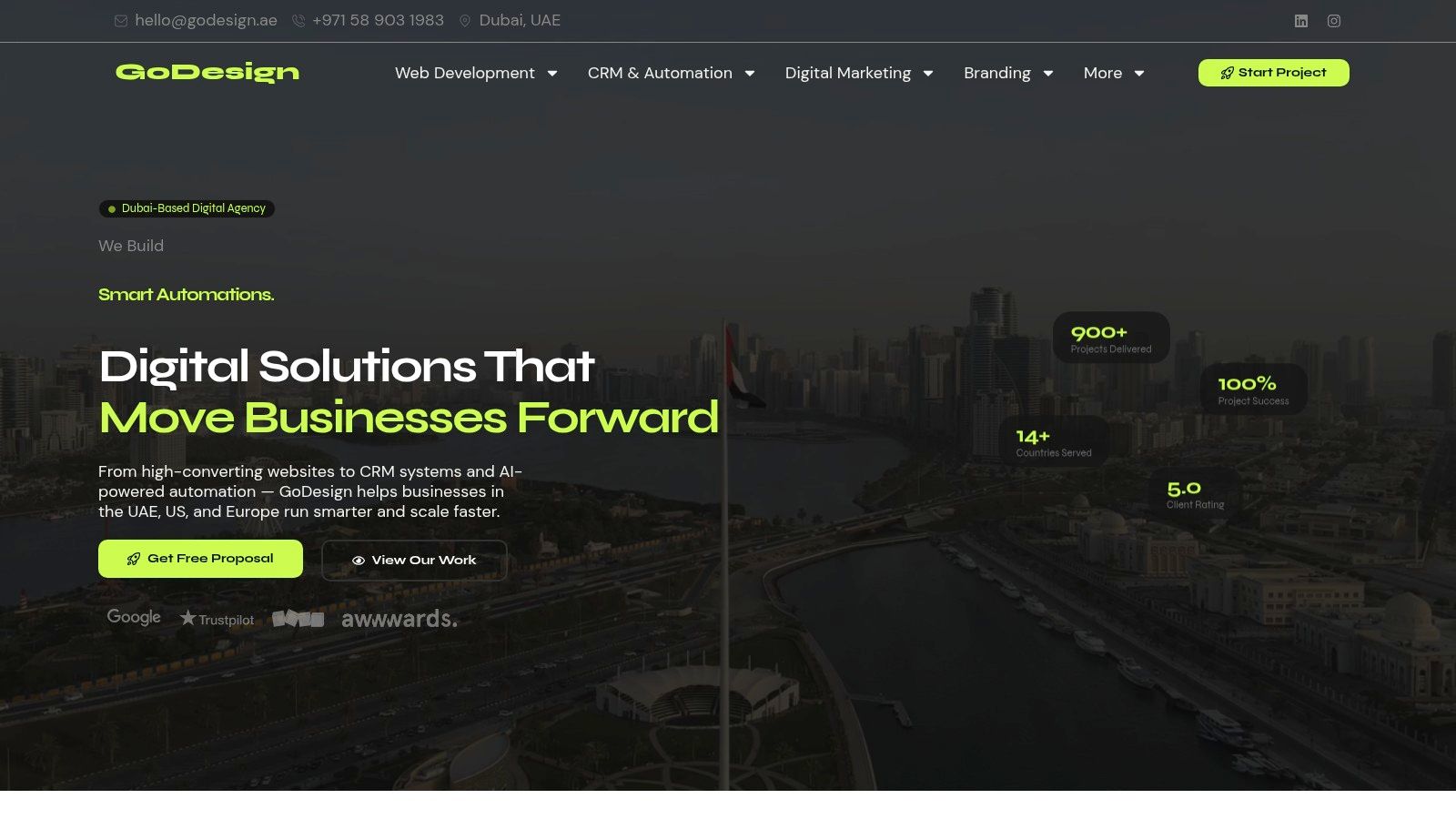
Your site looks fine. Leads still stall. Forms come in, nobody follows up properly, tracking is half set up, and your agency keeps talking about impressions. That is the point where you need a partner that can connect website, measurement, CRM, and automation in one system.
GoDesign FZE fits that brief better than many generalist agencies. If you need one team to build or rebuild the site, set up SEO foundations, configure CRM workflows, and tighten conversion paths, this is a practical first option.
Why GoDesign is the strongest all round choice
GoDesign suits SMEs that need technical execution, not just campaign management. The agency works across custom HTML, CSS, JS, WordPress, WooCommerce, Shopify, Laravel, Node.js, HubSpot, Zoho, n8n, GA4, GTM, WhatsApp Business, and AI chatbot integrations. For an owner or marketing lead, that matters because it cuts out the usual handoff problem between designer, developer, SEO freelancer, and CRM consultant.
That operating model is the key advantage. One team can map the user journey from click to enquiry to sales follow-up without splitting responsibility across multiple vendors. If your growth problem sits between channels, systems, and poor implementation, this matters more than flashy creative.
I also like the way GoDesign appears to frame content and conversion as part of the same engine. Its guidance on B2B content marketing strategy points in the right direction for companies that need content to support pipeline, not just fill a blog.
Practical rule: If an agency cannot explain how GTM events, GA4 goals, CRM stages, lead routing, and follow-up automation connect, it should not be running your growth stack.
GoDesign is a strong fit when the website is not the only problem. Many SMEs assume they need more traffic. Often they need clearer messaging, faster pages, cleaner tracking, stronger forms, better lead handling, and a CRM that sales will use. That is the right lens to use when you assess this agency.
Their own guidance on improving website conversion rate also shows the kind of practical thinking you should expect in a first call.
Best fit and what to ask
GoDesign is a good match for:
- Founders launching quickly: You need website build, lead capture, and automation set up together.
- SMEs replacing an underperforming site: You want the rebuild tied to SEO, tracking, and conversion, not just a visual refresh.
- Sales-led businesses: You need HubSpot or Zoho configured around actual pipeline stages and follow-up rules.
- E-commerce teams: You want WooCommerce or Shopify supported by technical SEO and conversion work.
Pros:
- One team across build and growth: Web development, CRM setup, automation, AI chatbots, and SEO can be handled in the same workflow.
- Broad platform coverage: Useful if your stack spans CMS, analytics, forms, and sales systems.
- Good fit for technical buyers: Strong option for teams that care about integrations, attribution, and process design.
- Clear SME relevance: The service mix aligns with the usual pain points in growing businesses.
Cons:
- No public pricing: You will need a proposal before you can compare value properly.
- Less suited to large enterprise complexity: If you need multiple country teams, heavy media buying, or layered procurement, look closely at capacity and process depth.
Ask these questions on the first call:
- Who handles technical scoping? Get the person responsible for implementation into the conversation early.
- What is included in measurement setup? GA4, GTM, form tracking, and lead-source visibility should be defined up front.
- How does CRM connect to marketing activity? Ask how enquiries are routed, tagged, and tracked through pipeline stages.
- What happens in the first 90 days after launch? You want a plan for fixes, testing, reporting, and iteration.
- What type of client gets the best results here? Their answer will tell you whether your company fits their real strengths.
My advice is simple. Put GoDesign on your shortlist if your decision depends on technical depth, conversion discipline, and CRM alignment, not just ad buying or social content. This is a sensible option for business owners who want a working lead system, not another slide deck.
2. NEXA Dubai
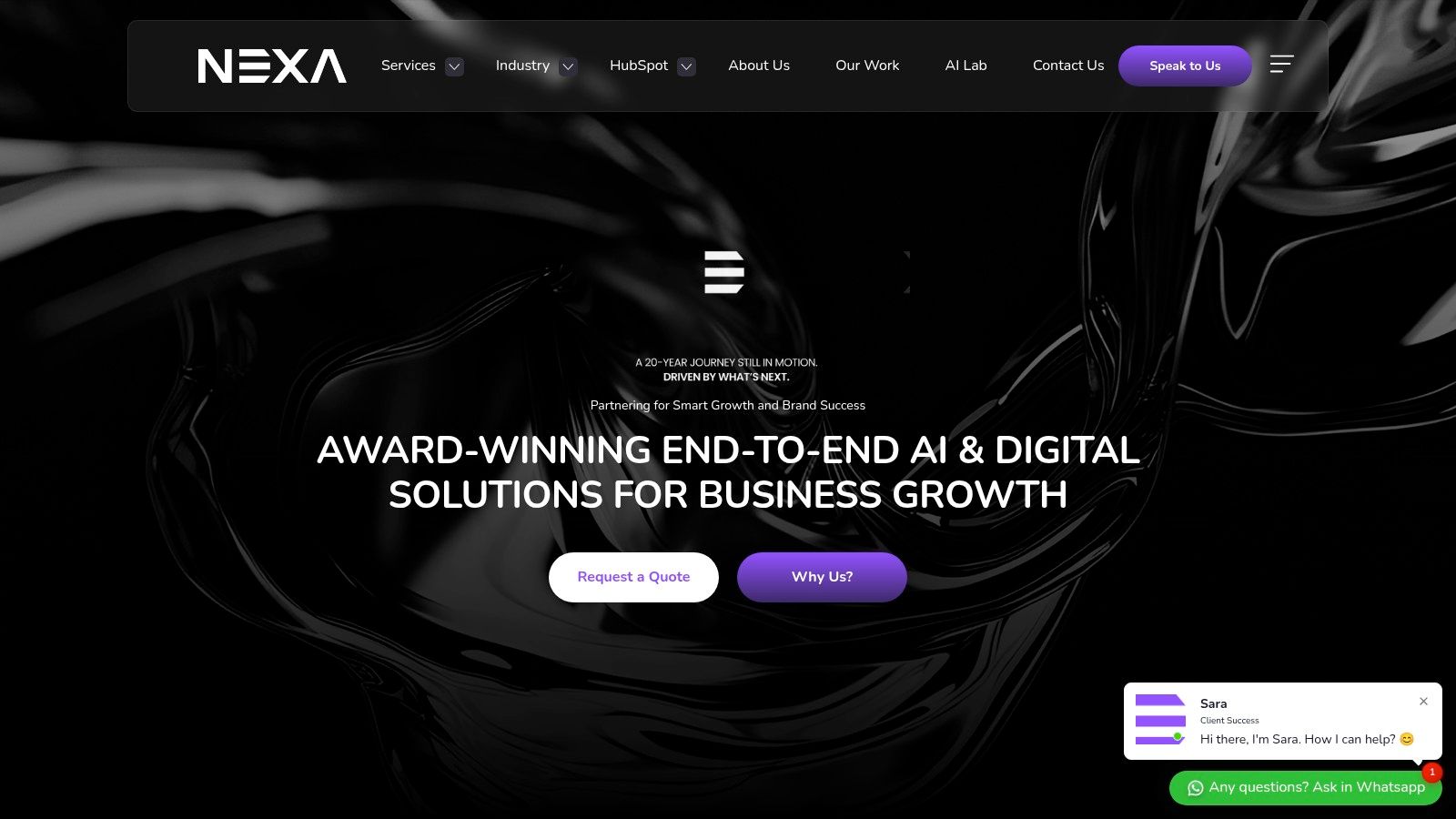
Your sales team is chasing leads, marketing is publishing content, and nobody can say which activity produced revenue. That is the problem NEXA is built to solve.
NEXA suits companies that need a tighter operating model, not just more campaign output. Its strength is the connection between content, SEO, paid media, web delivery, and HubSpot-led CRM work. If your growth problem sits between departments, this agency deserves serious consideration.
Who should hire NEXA
Start with the client profile. NEXA is a better fit for B2B firms, education groups, professional services, healthcare, and property businesses with longer sales cycles and multiple touchpoints before conversion. These companies usually need cleaner attribution, better lead handling, and stronger follow-up discipline.
That makes NEXA less about flashy execution and more about commercial structure. If your team already accepts that marketing must support sales pipeline, not just traffic, the fit is stronger. If you only want a few social posts or a low-cost ad retainer, look elsewhere.
The question is whether they can turn activity into a system. For B2B teams, that usually starts with clear messaging, a realistic funnel, and a documented content marketing strategy for B2B tied to buyer stages and CRM reporting.
What NEXA appears to do well
NEXA stands out when the brief spans multiple functions. Website rebuilds, search visibility, paid acquisition, lead nurturing, and CRM setup can sit under one plan instead of being split across separate vendors. That matters when accountability is weak and handoffs keep killing momentum.
Their HubSpot focus is also a practical filter. If you already use HubSpot, plan to adopt it, or need an agency that can connect forms, automation, lifecycle stages, and reporting, NEXA moves up the shortlist fast. If your stack is simple and you do not need sales and marketing connected, you may be paying for more process than you need.
Do not ask NEXA if they can run campaigns. Ask how they define a qualified lead, how that lead enters the CRM, and who owns conversion between enquiry and opportunity.
Pros:
- Strong fit for HubSpot-led growth: Good choice for companies that want sales, marketing, and reporting connected.
- Better process discipline than many generalist agencies: Useful for teams that need planning, workflows, and regular performance reviews.
- Broad delivery scope: Content, SEO, paid media, web, and CRM can be managed in one engagement.
Cons:
- Likely expensive for smaller businesses: Lean companies with narrow briefs may struggle to justify the cost.
- Not the best match for purely creative needs: If your requirement is social content, branding, or design support only, the model may feel too heavy.
Ask these questions on the first call:
- Who owns HubSpot architecture and data hygiene? You need the person responsible for lifecycle stages, attribution, and automation logic.
- How do you define MQL, SQL, and opportunity? If those definitions are vague, reporting will be vague too.
- What does the first 90 days include? Ask for setup, campaign launch, CRM work, reporting, and optimisation in writing.
- How do content and paid media feed the pipeline? You want a direct answer, not channel-by-channel reporting.
- Which type of client gets the best results with your model? Their answer will tell you whether you fit their real strengths or their sales pitch.
My advice. Put NEXA on your shortlist if you need a growth partner with CRM discipline, not just a traffic supplier. They make the most sense for businesses that want marketing tied to pipeline, reporting, and sales follow-up.
Visit NEXA.
3. Chain Reaction Dubai
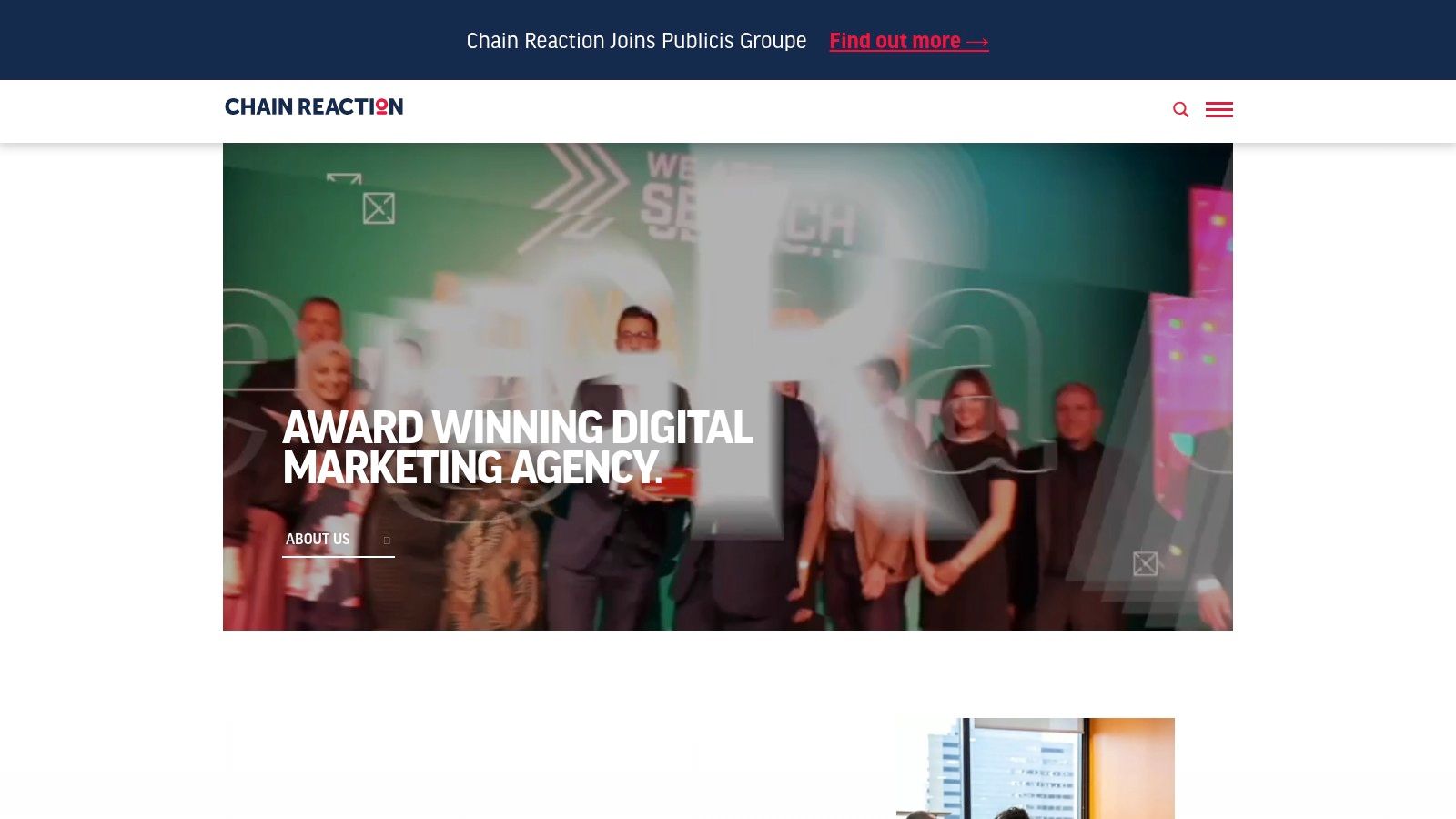
You are running campaigns across Dubai and Saudi, your ads are live in two languages, and results are uneven. English performs. Arabic underperforms. Reporting looks fine, but lead quality is inconsistent. That is the point where a generalist agency starts to cost you money.
Chain Reaction is a better fit for businesses that need regional execution, not just channel management. Its appeal is clear. It can handle Arabic and English campaigns with the technical and editorial detail that regional growth demands. That matters in SEO, paid search, paid social, landing page structure, and analytics setup.
Who should hire Chain Reaction
Put Chain Reaction on your shortlist if your business sells across the GCC and your marketing team needs one agency to coordinate media, search, creative, and reporting across markets. It looks strongest for mid-market and enterprise brands with multi-country campaigns, several stakeholders, and approval layers that require tighter account management.
The ideal client profile is narrower than "any business that needs marketing." This agency makes more sense for retail groups, hospitality brands, financial services firms, government-linked projects, and entertainment businesses than for a small local company that just wants a few leads from one channel.
Its technical strength is regional performance marketing. That includes bilingual SEO, PPC, paid social, analytics, creative support, and web execution tied to campaign delivery. If your problem is cross-market consistency and language accuracy, that is useful. If your problem is CRM architecture, sales pipeline design, or marketing automation ownership, other agencies on this list may be a better fit.
Here is the practical filter I would use:
- Choose Chain Reaction if: You need Arabic and English execution across SEO, paid media, and landing pages in more than one GCC market.
- Skip them if: Your brief is small, your budget is tight, or you only need a website refresh, content support, or one-channel management.
- Test them on reporting: Ask how they separate business outcomes from platform metrics. If the answer stays at impressions, clicks, and reach, keep looking.
What needs pressure-testing is speed. Agencies built for larger accounts often bring more process, more approvals, and more layers between strategy and launch. That can protect quality. It can also slow momentum if you need campaigns live fast.
Ask these questions on the first call:
- Who leads Arabic keyword research and copy review? You want a named specialist, not a vague promise about bilingual capability.
- How do you adapt campaigns by market? Dubai, Abu Dhabi, and Saudi should not be treated as one audience.
- What gets built in-house versus outsourced? This will tell you how much control they really have over delivery.
- How is attribution handled across SEO, paid media, and landing pages? You need a clear measurement model before spend starts.
- What does the first 60 to 90 days look like? Ask for audit, setup, launch sequence, reporting cadence, and optimisation steps in writing.
Pros:
- Strong bilingual execution: Good fit for brands that need Arabic and English campaigns handled properly.
- Clear performance focus: Better suited to businesses that care about SEO, PPC, and paid social working together.
- Regional reach: Useful for companies expanding beyond one city or one country.
Cons:
- Probably retainer-heavy: Smaller businesses may end up paying for more agency structure than they need.
- Slower early rollout: Larger teams and approval processes can delay launch speed.
My advice. Shortlist Chain Reaction if regional performance is the problem you need solved. Do not hire them because the service list looks broad. Hire them if your growth plan depends on bilingual execution, cross-market coordination, and disciplined media management.
Visit Chain Reaction.
4. Igloo Dubai
Your website looks decent, your Instagram is active, and leads still come in unevenly. That is the kind of situation where Igloo makes sense. They appear better suited to SMEs that need cleaner brand execution and steady campaign support, not a heavy enterprise setup full of layers, meetings, and inflated retainers.
Igloo fits the middle of the market. That matters. Some agencies are too narrow and only solve one channel problem. Others bring a large-agency process that can slow down a business that just needs sharper creative, better social content, stronger paid campaigns, and basic SEO support working together.
Best fit for businesses that need brand and demand together
I would look at Igloo if you run a consumer-facing business where presentation affects conversion. Wellness clinics, education providers, retail brands, hospitality concepts, and lifestyle businesses usually fall into that camp. If your ads, landing pages, and social presence feel disconnected, a creative-led agency with performance capability is often the better hire than a pure media shop.
The free strategy call is useful, but only if you treat it as a screening tool. Do not use that call to hear a pitch. Use it to test how they think.
Ask these questions:
- Who owns creative direction and who owns campaign performance? You need to know whether one person is coordinating both or whether work passes between disconnected teams.
- What does reporting include? Ask to see a real sample, not a polished template.
- Which channels do you manage directly? Get a clear answer on paid social, Google Ads, content, SEO, and web updates.
- How do you improve weak conversion pages? A good agency should talk about offers, structure, copy, and tracking, not just ad spend.
- What type of client gets the best results with you? Their answer will tell you whether they understand their lane.
A crowded agency market makes positioning easy to fake. Smaller and mid-sized firms stand out when they can explain exactly who they help, what they do well, and where they are not the right fit.
Pros:
- Good fit for brand-led SMEs: Useful for businesses that need creative quality and lead generation in the same engagement.
- Practical first step: The strategy call gives you a low-commitment way to test fit and communication style.
- Likely easier to work with than larger firms: Better option for owners who want responsiveness without a corporate process.
Cons:
- May not suit multi-market expansion: If you need large-scale rollout across several countries, capacity could become a constraint.
- Pricing still needs qualification: You will need the discovery call to judge scope, team seniority, and value.
My advice. Shortlist Igloo if your business has a presentation problem and a pipeline problem at the same time. If you only need advanced technical SEO or regional media scale, look elsewhere. If you need a team that can tighten the brand, improve campaign consistency, and support growth without overcomplicating the engagement, they are worth the call.
Visit Igloo.
5. SEO Sherpa Dubai
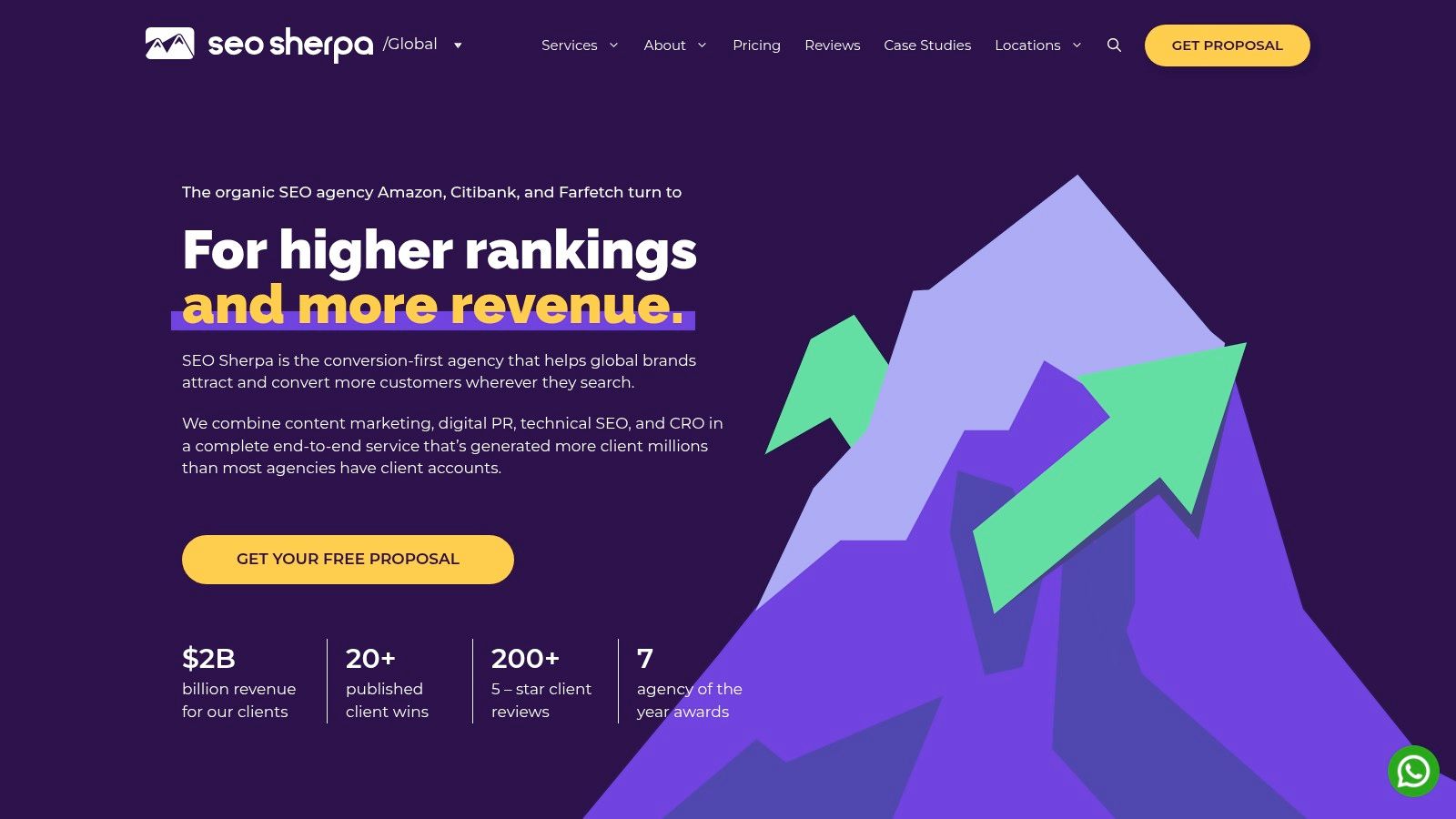
Your traffic looks healthy, but leads are flat. Pages rank, yet the pipeline does not move. That is the point where a generalist agency usually gives you more activity, while a specialist finds what is blocking search from turning into revenue.
SEO Sherpa belongs on your shortlist if organic search is a core growth channel and you want a team built for technical SEO, content strategy, and authority building. This is not the agency to hire as a catch-all marketing department. It is the agency to hire when rankings, qualified traffic, and search-led lead generation need focused attention.
That distinction matters.
Businesses in Dubai often treat SEO as a side task under a wider retainer. That usually produces surface-level keyword reporting and very little change in site structure, content quality, or link authority. A specialist is a better choice when the problem sits deeper in the stack. Indexation issues, weak internal linking, thin category pages, or poor content targeting all need disciplined SEO work. If you need context on the local search environment, this guide to SEO services in Dubai is a useful benchmark.
Best fit for search-led growth
SEO Sherpa is a strong fit for three types of buyers:
- Established SMEs with underperforming websites: You already have content and domain history, but technical issues or weak page strategy are holding performance back.
- Lead generation businesses with high customer value: Law firms, clinics, B2B services, and similar companies can justify a longer SEO payback period because one qualified lead is worth real money.
- Content-led brands that need authority: If growth depends on publishing, topic coverage, and earning stronger backlinks, a specialist gives you more depth than a broad agency retainer.
The trade-off is simple. SEO takes time, and it also needs buy-in from whoever controls your site, content, and development queue. If your team cannot implement recommendations, even a good agency will struggle to produce results.
Use this section as a filter, not a sales summary.
Ask SEO Sherpa these questions before you sign:
- What usually blocks results in accounts like ours? A serious SEO agency should talk about site structure, content gaps, authority, and implementation bottlenecks.
- How much of the work is strategy versus execution? You need to know who writes, who audits, who handles technical fixes, and what still sits with your internal team.
- How do you prioritise pages and keywords? Good answers focus on business value, search intent, and conversion potential, not raw traffic.
- What does a realistic 6 to 12 month plan look like? If the roadmap is vague, expect vague outcomes.
Pros:
- Specialist SEO focus: Better fit for companies that want organic growth to become a serious acquisition channel.
- Technical depth: Useful for audits, content architecture, on-page improvements, and digital PR support.
- Clearer fit for informed buyers: Strong option if you already understand that SEO is an operating discipline, not a one-off project.
Cons:
- Limited breadth: Look elsewhere if you need paid media, CRM setup, social management, and lifecycle marketing under one roof.
- Results take time: SEO is a slower channel, especially if your site has deep technical or content issues.
My advice. Shortlist SEO Sherpa if search is already important to your business or should be. Do not hire them just because you want "better marketing." Hire them because you know organic visibility, content quality, and technical SEO are commercial priorities.
Visit SEO Sherpa.
6. Incubeta MENA Dubai
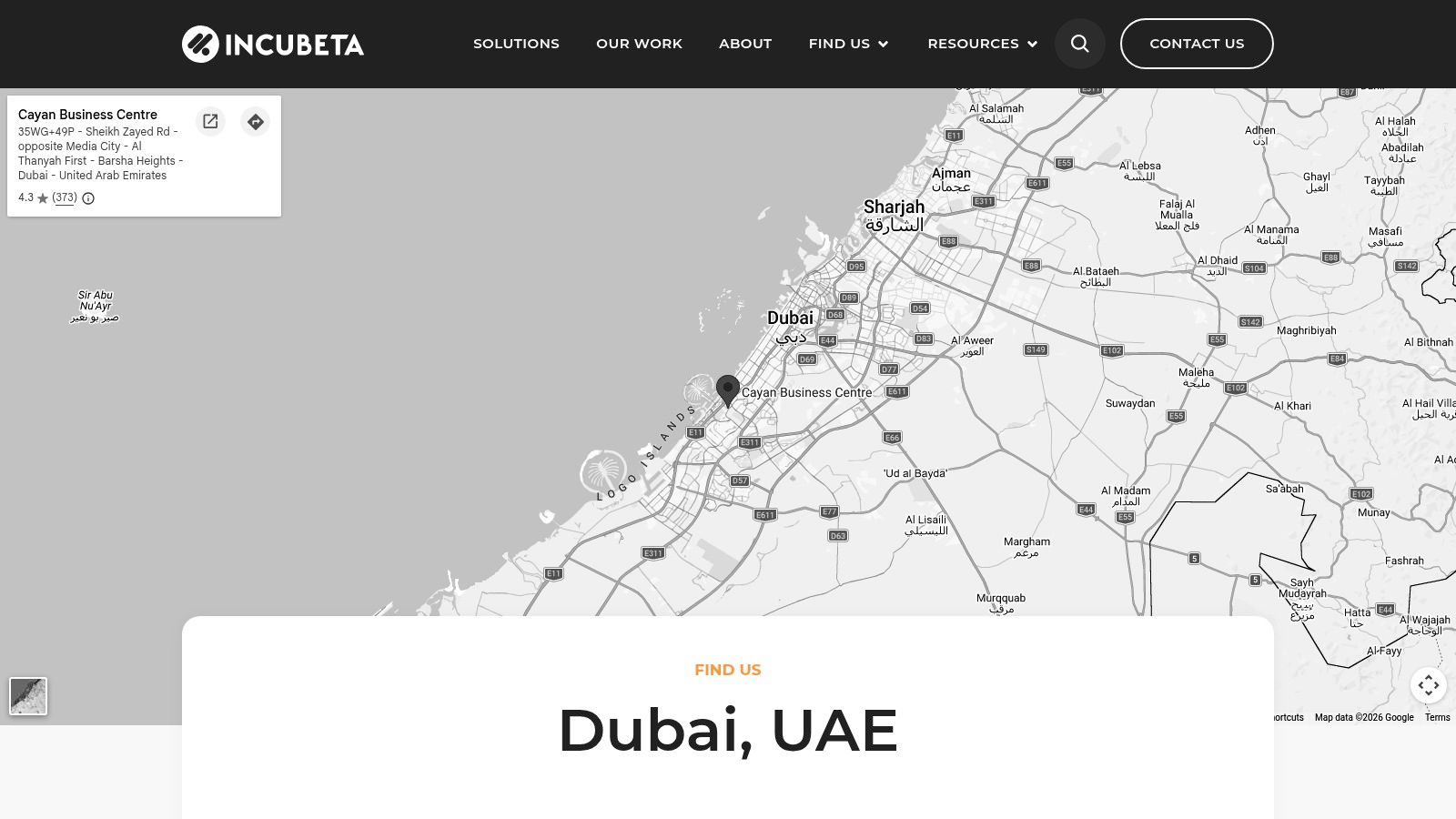
Your team approves ad spend every month. Sales comes back asking which channels produced pipeline. The agency sends a dashboard full of clicks, impressions, and blended conversion numbers nobody trusts. That is the problem Incubeta is built to solve.
Incubeta belongs on your shortlist if the issue is measurement discipline, not basic campaign execution. They are a stronger fit for companies that already spend serious money across paid search, paid social, analytics, and multiple markets, and now need cleaner attribution, tighter reporting, and better decision-making.
Best fit for teams that need measurement they can defend
This is not the agency I would send a small local business that just needs a few leads from Meta and Google. It is better suited to larger SMEs, regional operators, and enterprise marketing teams with finance pressure, internal reporting requirements, and technical stakeholders who will question tracking quality.
Their value is not just media buying. It is the operating layer around the media. GA4 configuration, conversion tracking, reporting logic, attribution model selection, and performance governance all matter here. If your internal team keeps arguing about which numbers are right, fix that before you increase spend.
For Dubai brands that also care about organic growth, measurement should connect back to channel priorities and local search intent. This guide to search engine optimization in Dubai is a useful reminder that better reporting only matters if it changes what you fund, fix, or stop.
What to ask Incubeta:
- Which metrics they treat as decision metrics: Ask what changes budget allocation, not what fills a report.
- How they test and validate tracking: You want a clear process for GA4 events, form submissions, call tracking, and attribution checks.
- Who owns implementation: Strategy without technical execution creates reporting gaps fast.
- How they report across markets: If you operate across MENA, ask how they handle currency, channel differences, naming conventions, and local benchmarks.
- What a useful monthly review looks like: A good answer focuses on decisions, anomalies, and next actions, not a longer slide deck.
If an agency cannot explain where conversion data comes from, do not trust the ROI model.
Pros:
- Strong analytics and attribution capability: Good fit for businesses that need cleaner data before scaling spend.
- Useful for multi-market reporting: Better than smaller agencies if your campaigns run across several countries.
- Good match for mature teams: Works well when marketing, sales, and finance all need reporting they can defend.
Cons:
- Too heavy for very small firms: If your needs are simple, the process may feel slower and more detailed than necessary.
- Less suitable for brands that mainly need creative volume: Their strength is measurement and performance structure, not content-led execution.
My advice. Hire Incubeta if your main bottleneck is trust in the numbers. Do not hire them because the team presents well in a pitch. Hire them if you need an agency that can set up tracking properly, explain performance clearly, and help your business make budget decisions with fewer guesses.
Visit Incubeta MENA.
7. McCollins Media Dubai

Your team needs a campaign live next week, fresh creative for social, paid ads that match the offer, and a website update that does not sit in a queue behind three separate vendors. That is the kind of problem McCollins Media is built to solve.
McCollins makes sense for businesses that need steady output more than technical complexity. The appeal is simple. One agency can cover content production, social media, paid campaigns, branding, and web support without forcing you to coordinate multiple specialists.
Best fit for brands that win on speed and creative volume
McCollins is a practical option for hospitality, F&B, healthcare, luxury, retail, and other consumer-facing brands where visual quality and turnaround time affect revenue. If your marketing engine depends on regular shoots, new creatives, landing page updates, and campaign refreshes, fewer handoffs usually means better execution.
That is the key decision point here. Do you need a measurement-heavy growth partner, or do you need a team that can produce and launch consistently? McCollins fits the second brief.
I would not choose them for CRM architecture, sales automation, or complex attribution setup. Choose them if your bottleneck is production capacity, campaign coordination, and keeping the brand message consistent across channels.
Use this filter before you sign:
- Pick McCollins if: You want content, creative, paid media, and website support handled by one team with faster internal coordination.
- Pass if: Your priority is HubSpot implementation, Zoho workflows, lead routing, lifecycle reporting, or deep revenue attribution.
- Ask these questions: Who owns strategy after kickoff? How are briefs passed from account managers to creative and media teams? How fast can they turn around new assets? What approvals are needed from your side? Which work is done in-house versus outsourced?
Pros:
- Strong fit for execution-led marketing: Useful when your business needs frequent creative output across social, paid, and web.
- Better operational simplicity: Fewer vendors means fewer delays, fewer mixed messages, and less client-side coordination.
- Relevant for local consumer brands: A solid choice if campaign speed and visual consistency matter more than back-end martech depth.
Cons:
- Limited appeal for CRM-heavy businesses: If sales ops, automation, and reporting accuracy drive your decision, look elsewhere.
- Scoping matters a lot: You need a detailed proposal to judge value, because broad service menus can hide uneven depth.
- Quality control needs vetting: Ask to see recent work across multiple formats, not just polished highlight pieces.
My advice. Hire McCollins when your business needs a capable production and campaign partner under one roof. Do not hire them because the service list is long. Hire them if your growth depends on shipping creative work quickly, keeping campaigns aligned, and reducing the friction of managing too many agencies.
Visit McCollins Media.
Top 7 Dubai Digital Marketing Agencies Comparison
| Agency | Implementation Complexity 🔄 | Resource Requirements ⚡ | Expected Outcomes ⭐📊 | Ideal Use Cases 💡 | Key Advantages |
|---|---|---|---|---|---|
| GoDesign FZE | 🔄 Moderate–High, custom full‑stack builds, CRM & AI integrations | ⚡ Moderate, small specialist team; needs stakeholder access, APIs, content | ⭐⭐⭐⭐, improved SEO, conversions, faster launches; measurable revenue focus | 💡 SMEs/startups needing end‑to‑end web + CRM + automation | End‑to‑end engineering + SEO‑first builds, 24/7 support, strong project track record |
| NEXA (Digital Nexa) | 🔄 High, integrated HubSpot, analytics and multi‑channel programs | ⚡ High, cross‑functional teams, data inputs and campaign budgets | ⭐⭐⭐⭐, ROI‑focused growth with robust measurement | 💡 Mid→large B2B/B2C brands needing HubSpot‑led growth and analytics | Top‑tier HubSpot partner, long regional track record, analytics‑led strategy |
| Chain Reaction | 🔄 Medium–High, multi‑channel regional campaigns, bilingual execution | ⚡ Moderate–High, retainer model, creative + media spend for multi‑market work | ⭐⭐⭐⭐, strong regional performance, awards, effective Arabic SEO | 💡 Brands targeting MENA with Arabic SEO and integrated paid/search campaigns | Regional footprint, Arabic SEO expertise, award‑winning performance results |
| Igloo (We Are Igloo) | 🔄 Medium, social, paid and creative workflows with balanced outputs | ⚡ Moderate, creative assets, ad budgets; quick on‑ramp via discovery call | ⭐⭐⭐, solid growth for SMEs; balanced creative + performance | 💡 SMEs and growth‑stage brands needing social + paid + SEO support | Free strategy call, balanced creative/performance mix, broad SME portfolio |
| SEO Sherpa | 🔄 Medium, specialist SEO processes: audits, content, PR & CRO | ⚡ Low–Moderate, content production and technical fixes; longer timelines | ⭐⭐⭐⭐, sustainable, compounding organic traffic and revenue (slow burn) | 💡 Brands prioritizing organic search and long‑term SEO investment | Deep SEO specialization, local R&D, transparent pricing and case studies |
| Incubeta MENA | 🔄 High, enterprise measurement, attribution and multi‑market frameworks | ⚡ High, enterprise budgets, cross‑market coordination, analytics investment | ⭐⭐⭐⭐, advanced attribution and LTV‑driven performance | 💡 Enterprises needing rigorous measurement, GA4/GMP and cross‑market scale | Global network, mature measurement frameworks, thought leadership resources |
| McCollins Media | 🔄 Medium, integrated social, paid, web and in‑house production workflows | ⚡ Moderate, production resources, content teams and media spend | ⭐⭐⭐, cohesive content + paid + social outcomes; faster production cycles | 💡 Brands wanting in‑house film/content and integrated campaign delivery | In‑house production, integrated service mix, local Dubai presence |
From List to Launch Your Action Plan to Hire the Best
You have seven agency names on the page. By next week, one of them will be asking for access to your ad accounts, website, CRM, and reporting stack. Pick the wrong team and you do not just lose a retainer. You lose time, data quality, and sales momentum.
Treat this as a hiring decision, not a chemistry test.
The right agency is the one built for your problem, your budget, and your operating pace. A polished pitch does not tell you that. Their delivery model, technical depth, and account structure do.
How to Shortlist Your Top 3 Agencies
Start with your primary bottleneck. Be specific.
If leads are coming in but sales follow-up is messy, prioritize agencies with CRM, automation, and tracking capability. If search visibility is weak, keep the SEO specialist. If your brand needs a steady flow of content tied to paid distribution, keep the teams built for creative production and paid social execution.
Then filter by business fit:
- Match the agency to the work. Do not hire a broad branding shop to fix attribution. Do not hire an SEO-led team if your real issue is lead routing, landing pages, and conversion tracking.
- Match the agency to your size. Enterprise agencies often bring stronger reporting and process discipline, but they also bring slower approvals and larger retainers. SMEs usually need faster execution and tighter scopes.
- Match the agency to your internal capacity. Some agencies expect your team to supply content, approvals, and technical access quickly. Others are set up to do more of the execution themselves.
- Cut weak matches early. Close is not enough. If an agency's strength sits beside your problem instead of solving it directly, remove them.
Comparing agencies as if they are interchangeable is why most shortlists go wrong. Business owners compare agencies as if they are interchangeable. They are not. One team may be strong in SEO and technical audits. Another may be strong in CRM implementation and reporting. Another may be built around creative and paid media. Judge them by role, not brand reputation.
Your Vetting Checklist: 10 Questions to Ask Before You Sign
Use the same questions on every call. That gives you a fair comparison and exposes weak answers fast.
- Who will run my account each week? Ask for names, roles, and experience level.
- What is your strongest service for a company like mine? Force them to choose between SEO, paid media, CRM, web, social, or analytics.
- Which case study is closest to my goal, budget, and sales cycle? If they cannot match all three, the fit is weaker than the pitch suggests.
- What will be live in the first 90 days? You want concrete outputs, not vague plans.
- How do you measure business impact? Ask how they connect channel metrics to pipeline, revenue, booked calls, or qualified leads.
- What do you need from my team every week? This tells you whether the engagement will stall in month one.
- Which tools do you use for tracking and reporting? Look for clear answers on analytics, attribution, CRM reporting, and dashboards.
- What is done in-house and what is outsourced? Hidden outsourcing often creates slower communication and lower accountability.
- What are the contract terms, notice period, and setup fees? Get this before you discuss creative ideas.
- If results are weak after 60 to 90 days, what do you change first? Good agencies have a clear diagnostic process.
Strong agencies answer with specifics.
Weak agencies fill the call with jargon, broad promises, and recycled case study language. That usually means the sales team is stronger than the delivery team.
How to Make the Final Call
Use a scorecard. Keep it simple. Rate each agency from 1 to 5 on these five factors:
- Core fit
- Technical capability
- Speed to launch
- Reporting quality
- Budget fit
Then add one more line item that owners often miss: delivery risk.
A smaller agency may give you senior attention and faster response times. It may also have limited bandwidth if your scope expands. A larger agency may offer stronger specialization across paid media, analytics, SEO, and creative. It may also move slower and assign junior day-to-day staff. Neither model is better on its own. The better model is the one that fits your sales cycle, internal pace, and level of technical dependency.
If you want a practical first call from this list, start with GoDesign FZE.
That recommendation is based on fit, not hype. GoDesign FZE makes sense for SMEs and growth-stage companies that need connected execution across website work, SEO, CRM setup, automation, and tracking. That matters if you want one partner to handle the website, funnel setup, reporting connections, and lead flow improvements without passing work between multiple vendors.
Do not treat that as an automatic yes. Treat it as a smart starting point if your brief spans web, search visibility, CRM, and automation in the same project.
Make each agency prove three things. They understand your actual constraint. They can execute the work with the team they are pitching. They can measure results in a way that matches how your business makes money.
That is how you hire with confidence instead of buying the best sales presentation.
Written with Outrank tool